China Best Biometric Security Systems for Global Buyers
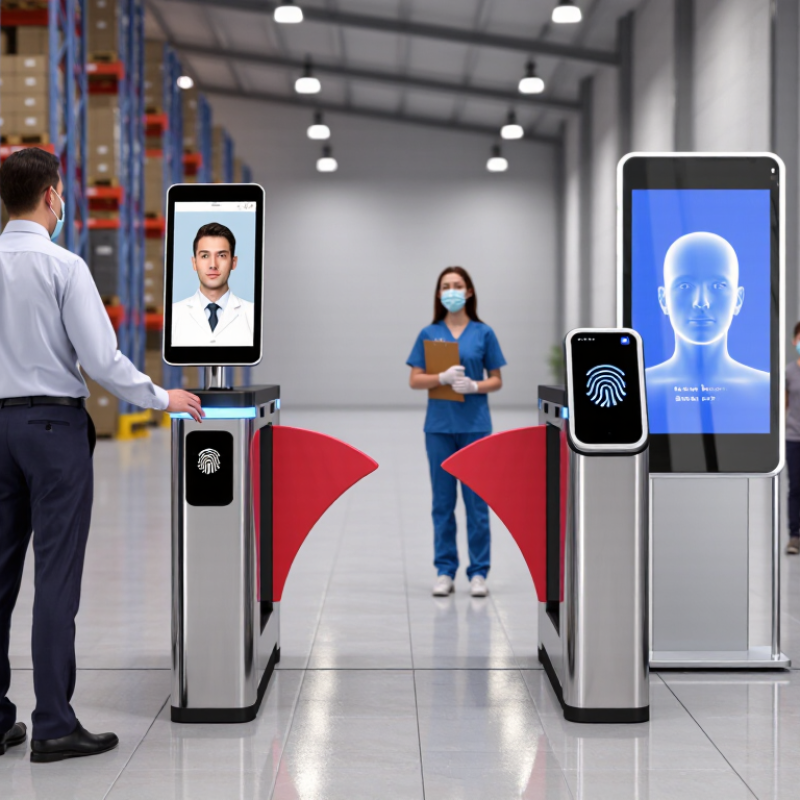
Global buyers comparing China’s Biometric Security systems need more than a feature list. Fingerprint readers, facial recognition terminals, and palm-vein devices suit different sites and workflows. A warehouse gate may require fast throughput, while a clinic entrance may need accessible, low-touch verification. Start with the actual risk, user volume, lighting, and network conditions. Small details matter.
Ask suppliers for documented accuracy and spoof-resistance test results, plus clear explanations of how tests were conducted. Check whether devices integrate with existing access-control platforms, and confirm what happens during network outages. Request a live demonstration using realistic lighting, masks, gloves, or other conditions expected at your site. Numbers alone can mislead. Also review enrollment procedures, data storage options, update policies, warranty terms, and local technical support. These checks help distinguish a polished brochure from a product that can be maintained over time.
Privacy and data-protection requirements vary by destination, so buyers should consult qualified local advisers before deployment. Avoid assuming that one device or certification works everywhere. Compare total ownership costs, including installation, software, training, and replacement parts. A lower purchase price may bring higher support costs later. Ask for references from customers with similar facilities, but verify them independently where practical. The best choice is not necessarily the most advanced system; it is the one whose performance, safeguards, and service match the site. Some trade-offs will remain. Document them before signing, then test the chosen system in a controlled pilot.
Define Biometric Security Systems and Their Main Authentication Modalities
A biometric security system checks measurable human traits to confirm or distinguish a person. Verification asks, “Is this the enrolled user?” Identification searches a group for a possible match. That distinction matters. Common modalities include fingerprints, facial features, iris patterns, voice, and behavioral signals such as typing rhythm. A fingerprint reader may capture ridge details at a door; a face system may compare an image with an enrolled template. These systems do not read identity perfectly. They produce match scores, which are compared with a chosen threshold.
Convenient, but not infallible. NIST’s 2019 report, Face Recognition Vendor Test (NISTIR 8280), found that false-positive rates for many tested face-recognition algorithms varied by demographic group, sometimes by factors of 10 to over 100. Results depended on the algorithm and image conditions, so this is not a universal performance figure. Lighting, camera angle, worn sensors, and enrollment quality can all affect a match. A clean demo can hide those weaknesses. Buyers should ask for independent test results, failure rates, and details on fallback checks—not just a headline accuracy figure. A passcode or staff review can help when a scan fails, though that adds friction. Convenience has a cost.
China Best Biometric Security Systems for Global Buyers - Define Biometric Security Systems and Their Main Authentication Modalities
A biometric security system verifies or identifies a person by measuring distinctive physical or behavioral characteristics. A system typically captures a sample, converts it into a digital template, and compares that template with an enrolled record. Biometric checks can be used alone or combined with a password, card, or other factor.
| Authentication modality | Biometric signal measured | Typical verification process | Common advantages | Important considerations | Typical applications |
|---|---|---|---|---|---|
| Fingerprint recognition | Ridge patterns, minutiae, and other features of a fingertip. | A sensor captures a fingerprint image or pattern and compares its extracted features with an enrolled template. | Compact sensors; quick checks; widely supported by access-control and personal devices. | Read quality can be affected by dirt, moisture, worn skin, cuts, or sensor condition. Use presentation-attack detection where appropriate. | Door access, time and attendance, device unlocking, and workstation sign-in. |
| Facial recognition | Spatial relationships and other features of the face, captured by a camera. | Software detects a face, extracts a feature representation, and compares it with an enrolled template; some systems also check for a live, genuine presentation. | Can support touch-free checks and can work with camera-based infrastructure. | Performance can vary with lighting, camera angle, occlusion, image quality, and demographic factors. Privacy, consent, and presentation-attack controls are important. | Access gates, identity verification, and supervised or consent-based entry workflows. |
| Iris recognition | Distinctive patterns in the colored ring of the eye. | A camera captures an image of the iris, often using near-infrared illumination, and software compares the encoded pattern with a stored template. | Iris patterns are highly distinctive and can be captured without physical contact. | Requires suitable image capture and user positioning; glasses, reflections, movement, and camera distance may affect acquisition. | High-assurance access points, controlled facilities, and identity checks where suitable capture equipment is available. |
| Voice recognition | Acoustic and speech-production characteristics in a person's voice. | A microphone records speech and the system compares voice features with an enrolled voice template; spoken content may also be checked separately. | Can enable remote or hands-free verification using audio equipment. | Background noise, illness, stress, changes in speaking conditions, and recorded or synthesized audio attacks can affect reliability. | Telephone-based verification, voice-enabled services, and hands-free authentication workflows. |
| Palm-vein recognition | The pattern of veins beneath the skin of the palm, typically imaged with near-infrared light. | A reader captures a palm-vein image and compares the extracted vascular pattern with an enrolled template. | Contactless readers are available; the vascular pattern is beneath the skin rather than on its surface. | Requires dedicated imaging hardware and proper hand placement; capture quality and environmental conditions can affect matching. | Facility access, workforce verification, and other controlled entry points. |
| Hand geometry | Measurements such as the shape and dimensions of the hand and fingers. | A reader captures the hand's geometry and compares measurements with an enrolled record. | Simple to use and can be suitable for routine access or attendance checks. | Hand shape is less distinctive than some other biometric traits; injuries, positioning, and changes over time may affect results. | Time and attendance systems and access control in managed environments. |
| Behavioral biometrics | Patterns such as typing rhythm, device interaction, gait, or other habitual actions. | The system analyzes behavior over time and compares observed patterns with an established profile, often as a supporting risk signal. | May support ongoing or passive risk assessment without requiring a separate deliberate scan at every check. | Behavior can change with device, task, health, or context. It is generally best treated as a supporting signal rather than a definitive identity proof. | Account security monitoring, fraud detection, and risk-based authentication. |
Related Posts
-
What Is the Best Biometric Security System from China?
-
10 Tips for Choosing a Biometric Security System
-
How to Choose Fingerprint Access Control Systems?
-
Top 10 Biometric Identification Systems for Global Buyers
-
2026 Best Fingerprint Readers for Global Buyers
-
Top Face Recognition Time Clock Systems for Businesses