2026 Best Fingerprint Readers for Global Buyers
Choosing the right Fingerprint Reader in 2026 requires more than comparing sensor resolution or advertised scan speed. Global buyers must examine accuracy, durability, data protection, and long-term support. A device that performs well in a quiet office may struggle near a dusty warehouse entrance. Wet fingers, dry skin, gloves, and harsh lighting can also affect enrollment and verification.
This guide reviews leading fingerprint readers through practical purchasing criteria. It considers optical, capacitive, and multispectral technologies, along with false acceptance rates, false rejection rates, and response times. Integration matters too. Reliable products should work with common access-control systems, workforce platforms, and secure identity software. Clear documentation and responsive technical support can prevent expensive installation delays.
Real-world testing remains essential. Product sheets do not always reveal how a reader behaves after thousands of daily scans. Buyers should request evaluation units when possible. They should test different users, mounting positions, temperatures, and cleaning routines. No single model fits every market. Even careful comparisons have blind spots. Certification claims should be checked against current regional requirements, privacy expectations, and procurement policies. A lower-cost unit may look attractive, yet replacement parts and maintenance can change its total cost. This overview aims to provide balanced, evidence-informed guidance for distributors, integrators, employers, and security professionals seeking dependable biometric equipment. Performance is important, but responsible deployment matters just as much.
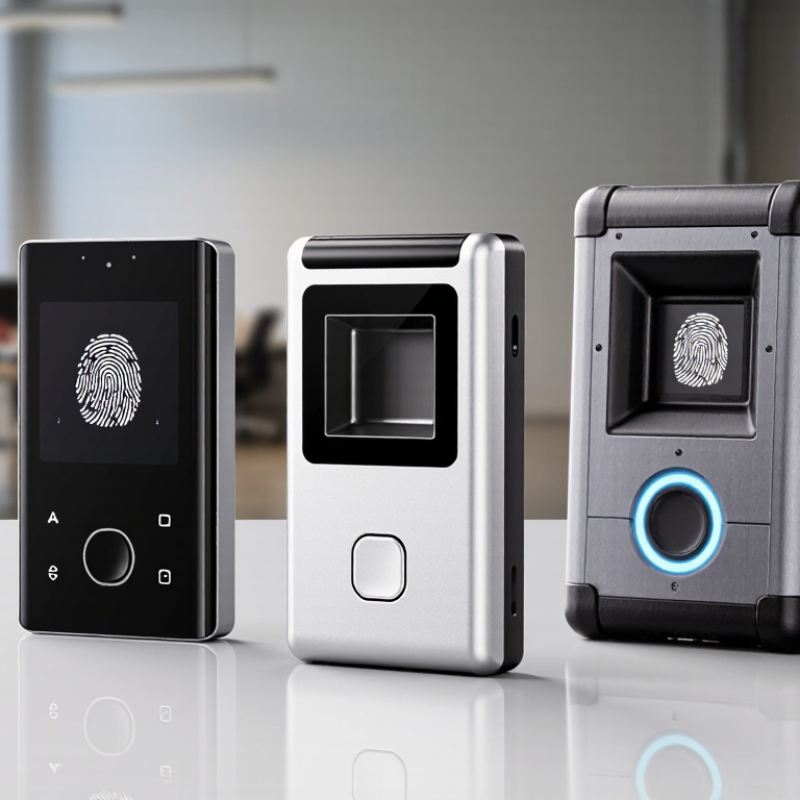
What Fingerprint Readers Are and How They Work
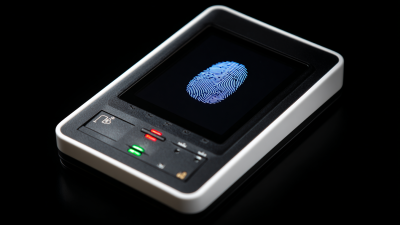
A fingerprint reader is a device that examines the unique ridge patterns on a person’s finger. It may use optical, capacitive, or ultrasonic sensing. Optical models capture an image with light. Capacitive models measure electrical differences across the skin. Ultrasonic models map ridge details through sound waves. It is not magic. Each method has practical limits.
During enrollment, the reader records several views of a finger. Software identifies points such as ridge endings and branch patterns. It converts these details into a mathematical template. A well-designed system should protect that template rather than retain a raw fingerprint image. During verification, a fresh scan is compared with the stored template. The system then accepts or rejects the match according to a confidence threshold. Liveness checks can also help detect artificial or copied surfaces.
Real-world accuracy depends on more than the sensor. Dust, moisture, dry skin, small cuts, and strong glare can affect results. Finger placement matters too. Small details matter. Global buyers should test readers in their actual climate and workflow. They should review false acceptance and false rejection rates, not just advertised speed. A fast reader that rejects clean, authorized fingers may create daily frustration. I would also question systems that offer impressive accuracy without explaining testing conditions. Good selection includes secure data handling, clear maintenance procedures, and accessible fallback options.
2026 Best Fingerprint Readers for Global Buyers - What Fingerprint Readers Are and How They Work
| Reader Type | How It Works | Typical Image Resolution | Typical Verification Time | Main Strengths | Main Limitations | Recommended Applications |
|---|---|---|---|---|---|---|
| Optical | Uses visible light and an image sensor to capture the ridge and valley pattern of a finger. | Commonly 500 dpi; some systems support higher resolution. | Approximately 0.3–1.5 seconds, depending on software and matching mode. | Mature technology, broad compatibility, clear image capture, and competitive cost. | Performance may decline with wet, dirty, worn, or damaged fingers; some models are vulnerable to surface contamination. | Office access control, time attendance, desktop enrollment, and general-purpose identity verification. |
| Capacitive | Measures electrical differences between fingerprint ridges and valleys through a conductive sensor surface. | Commonly 500 dpi; resolution varies by sensor design. | Approximately 0.2–1.0 seconds in typical access-control systems. | Compact construction, low power consumption, and fast response. | Can be affected by moisture, dry skin, gloves, and some electrically insulating contaminants. | Mobile devices, compact terminals, smart locks, and embedded authentication equipment. |
| Ultrasonic | Uses high-frequency sound waves to map fingerprint features, potentially including information beneath the surface. | Often specified around 500 dpi equivalent or higher, depending on the system. | Approximately 0.3–1.5 seconds in commercial implementations. | Can operate through certain thin cover materials and may provide better performance with some surface contamination. | Higher system cost, more complex integration, and fewer widely available reader modules. | High-security devices, premium embedded systems, and applications requiring concealed sensor integration. |
| Thermal | Detects temperature differences between fingerprint ridges and valleys as the finger contacts or passes over the sensor. | Typically designed for fingerprint pattern sensing rather than standard optical dpi specifications. | Approximately 0.5–2.0 seconds, depending on contact method and processing. | Compact design and reduced dependence on visible-light conditions. | Ambient temperature, cold fingers, and repeated-use heating can affect image quality. | Specialized portable equipment and environments where optical illumination is undesirable. |
| Multispectral | Combines multiple light wavelengths to capture surface and, in some designs, subsurface fingerprint characteristics. | Commonly based on 500 dpi-class imaging, with system-specific image processing. | Approximately 0.5–2.0 seconds in typical deployments. | May improve capture reliability for worn, dry, dirty, or difficult-to-read fingers. | Higher purchase price, larger hardware footprint, and greater power requirements. | Border control, regulated facilities, financial identity checks, and demanding industrial environments. |
| Evaluation Dimension | What to Check | Practical Buying Guidance |
|---|---|---|
| Matching Mode | One-to-one verification or one-to-many identification. | Choose verification for known-user access and identification for searching a database of enrolled users. |
| Enrollment Capacity | Number of users, fingerprints per user, and template storage method. | Allow capacity for staff turnover, duplicate fingers, administrators, and future expansion. |
| Connectivity | USB, Ethernet, Wi-Fi, Bluetooth, serial communication, or a combination. | Confirm compatibility with the host operating system, application programming interface, and local network policies. |
| Environmental Protection | Ingress protection rating, operating temperature, humidity tolerance, dust resistance, and vandal resistance. | Indoor readers may not be suitable for outdoor or industrial installation without a protected enclosure. |
| Security and Privacy | Template encryption, secure transmission, liveness detection, audit logs, and deletion controls. | Prefer systems that store protected biometric templates rather than raw fingerprint images and support applicable privacy requirements. |
| Total Cost of Ownership | Reader price, software licenses, installation, maintenance, replacement parts, and integration work. | Compare the complete deployment cost rather than the hardware purchase price alone. |
Note: Performance figures are representative industry ranges rather than guaranteed specifications. Actual results depend on sensor design, firmware, matching algorithms, enrollment quality, finger condition, operating environment, and system configuration.
Related Posts
-
How to Choose Fingerprint Access Control Systems?
-
China Top Fingerprint Scanner Manufacturers and Suppliers
-
10 Tips for Choosing a Biometric Security System
-
Unleashing Global Potential with the Best Fingerprint Machines Made in China
-

What Is the Best Biometric Security System from China?
-

Digital Strategies to Enhance Your Access Control Security with Proven Data Insights