Why Is Sodium Acetate Liquid Used in Industry?
Sodium Acetate Liquid is used in industry because it can supply sodium acetate in a form that is easy to meter, blend, and move through production systems. Its exact role depends on concentration, grade, and process conditions. In some applications, it helps control pH or provides acetate ions for a formulation. In others, it serves as a process ingredient or chemical feedstock. The liquid format can simplify dosing from a storage tank into a mixing vessel. That matters on a busy production line.
The details matter. A dilute solution and a concentrated product do not behave the same way, and neither suits every process. Manufacturers may use sodium acetate in areas such as food processing, textile operations, or chemical production, but requirements vary by product and facility. Buyers should check concentration, purity, compatibility, and supplier documentation rather than relying on the name alone. A specification sheet and safety data sheet can clarify handling and quality information. Even then, real process trials may reveal practical issues, such as crystallization during storage or changes in mixing behavior. Not always obvious. This guide explores why industries choose Sodium Acetate Liquid, what benefits its liquid form can offer, and which factors deserve careful review before use. It also recognizes a limitation: convenience does not automatically mean lower cost or better performance. The right choice depends on the application.
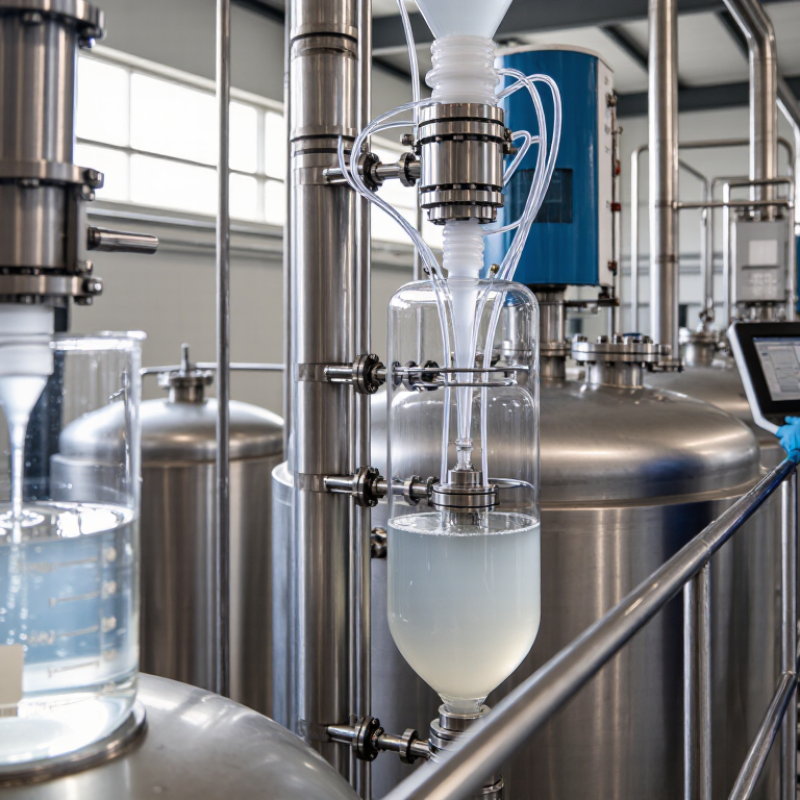
What Is Liquid Sodium Acetate?
Liquid sodium acetate is usually sodium acetate dissolved in water. Its chemical formula is CH₃COONa. The solution is typically clear and colorless, though its concentration can vary widely. It is not simply water with a fixed amount of salt; concentration affects its pH, handling, and performance. Small details matter.
In industrial processes, the solution can help stabilize pH in processing baths. It also supplies acetate, which can serve as a carbon source in some biological wastewater treatment systems. Operators choose a concentration suited to the process, then monitor dosing and pH rather than assume one mixture fits every plant. That practical point is easy to overlook. “Liquid sodium acetate” can also refer to molten sodium acetate trihydrate, a different material used to store heat as it changes phase. The wording is not always precise, so the product’s concentration and physical form should be checked before use.
Key Properties That Make It Useful in Industry
Liquid sodium acetate is useful because its properties suit tightly controlled process conditions. At 20°C, PubChem and the International Chemical Safety Card report a water solubility of about 46.5 g per 100 mL. This lets operators meter a pumpable concentrate instead of dissolving dry salt at each dosing point. Acetate–acetic acid buffers work near acetic acid’s pKa, 4.76 at 25°C, as reported in the CRC Handbook. That range supports pH control in mildly acidic textile and chemical process baths. Small changes matter. Actual pH shifts with concentration, temperature, and contaminants, so routine checks remain necessary. Acetate can also supply biodegradable carbon for wastewater denitrification. The U.S. EPA’s 2010 Nutrient Control Design Manual discusses external carbon dosing to support this process.
A separate application uses sodium acetate trihydrate for thermal energy storage. A 2009 review by Sharma and colleagues in Renewable and Sustainable Energy Reviews reports a phase-change temperature near 58°C and latent heat around 264 kJ/kg. Those values apply to the hydrate, not every sodium acetate liquid. Thermal-storage systems rely on repeated melting and crystallization; ordinary aqueous process feeds are selected for solubility and dosing control. The trade-off is real. Supercooling or phase separation can make heat delivery less repeatable, so system design and cycling tests matter.
How Liquid Sodium Acetate Functions in Industrial Processes
Why Is Sodium Acetate Liquid Used in Industry?
How Liquid Sodium Acetate Functions in Industrial Processes
In wastewater treatment, liquid sodium acetate supplies dissolved, readily biodegradable carbon. Denitrifying bacteria use that carbon to convert nitrate into nitrogen gas in anoxic tanks. Operators can meter the solution with a dosing pump and feed it near a mixing point. That makes adjustment practical.
The U.S. EPA’s Nutrient Control Design Manual (2010) gives a theoretical requirement of 2.86 kilograms of chemical oxygen demand per kilogram of nitrate-nitrogen reduced. Actual needs vary with wastewater composition, biomass growth, and treatment targets. The figure is a design benchmark, not a dosing recipe. Not quite that simple.
Operators monitor nitrate, dissolved oxygen, and effluent quality while adjusting feed rates. Too little carbon can leave nitrate behind; too much can increase residual organic matter and operating costs. Storage conditions matter, too. A concentrated solution may crystallize if temperature and concentration are poorly matched. Site testing helps confirm the dose, though plant conditions can still shift.
Major Industrial Applications of Liquid Sodium Acetate
Liquid sodium acetate is used where industries need a soluble, controllable source of acetate ions. A major application is wastewater treatment. In biological denitrification, microbes can use acetate as a carbon source to help convert nitrate into nitrogen gas. Operators dose the solution according to flow and water chemistry, rather than relying on a fixed amount. Too little may limit treatment; too much can raise organic loading.
Textile processors may use sodium acetate solutions to help buffer pH during dyeing and finishing. A steadier pH can support more consistent dye uptake, though the right dose depends on the fabric, dye, and process conditions. Sodium acetate also serves as a buffering or process ingredient in other chemical operations. It is useful, but not universal. Compatibility matters.
Tips: Check concentration and purity on the supplier’s specification sheet, and trial the solution at process scale before routine use. Track pH, temperature, and dosing. Small changes matter. Don’t assume one recipe fits every plant.
Storage, Handling, and Safety Considerations
Sodium acetate liquid is commonly supplied as an aqueous solution, so storage needs depend on its concentration and temperature. Keep it in a sealed, clearly labeled container made from a compatible material. Store containers upright in a cool, well-ventilated area, away from direct heat and contamination. Concentrated solutions can form crystals after cooling or water loss. Check for deposits before pumping or dosing; clear liquid alone does not confirm concentration or quality. Follow the product’s safety data sheet and site procedures.
Tips: Wear splash goggles and suitable gloves when transferring the liquid. Use a clean pump or pouring aid to reduce splashes. If a spill occurs, contain it and follow the safety data sheet for cleanup. Keep it out of drains.
Before opening a container, check its label and condition. Use secondary containment where practical, especially near floor drains or equipment. Avoid returning unused liquid to the storage container, since this can introduce contamination. Small details matter. Temperature records can also help explain unexpected crystals or changes in flow. If the liquid looks unusual, pause handling and check with the site’s safety lead rather than guessing.