Skip To Content

Top 10 Water Disinfection Methods for Safe Drinking Water?

Access to safe drinking water is a fundamental need for all. Water Disinfection is crucial to ensure water quality and eliminate harmful pathogens. Various methods exist to achieve effective water disinfection. Each technique brings its benefits and shortcomings, which require careful consideration.

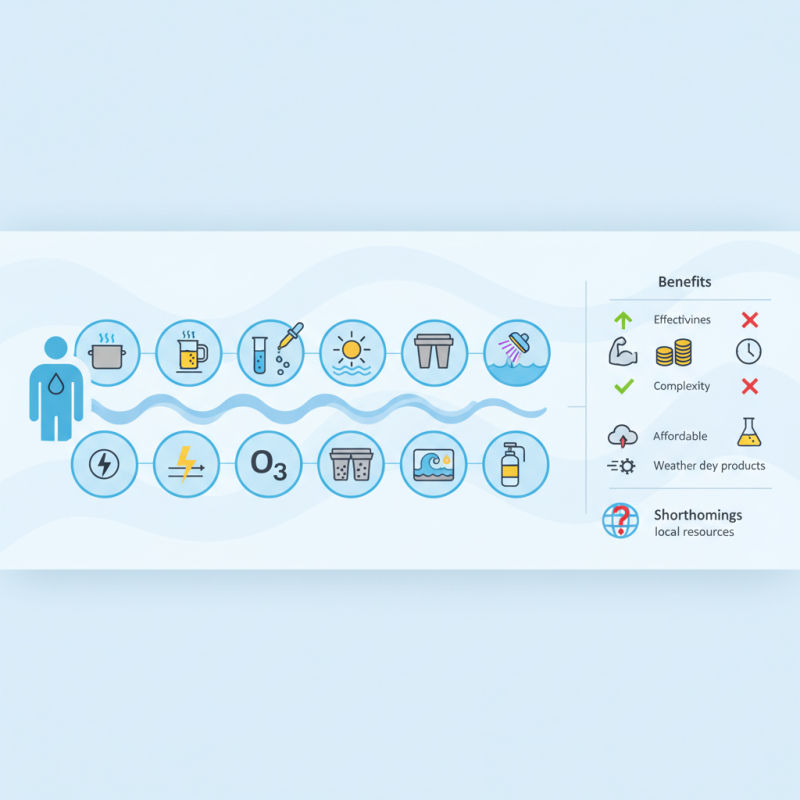
Understanding these methods can help in making informed choices. For instance, boiling water is effective but may not be practical for large quantities. Chlorination is widely used but can produce chemical by-products. Solar disinfection harnesses natural sunlight, yet it demands clear weather conditions. The choice of method often depends on local resources and specific needs, highlighting the complexity of ensuring safe drinking water.

As we explore the top ten water disinfection methods, it becomes clear that no single method is perfect. Each has its unique advantages and limitations. Reflecting on these can lead to better practices and improved health outcomes. Informed options are vital for communities striving for safe drinking water.
Top 10 Water Disinfection Methods for Safe Drinking Water?

Overview of Water Disinfection Methods for Safe Drinking Water

Water disinfection is essential for ensuring safe drinking water. Various methods exist, each with unique benefits. Common techniques include chlorination, UV radiation, and filtration. Chlorination is widely used due to its efficiency in killing bacteria and viruses. It leaves a residual disinfectant in the water. However, it may produce harmful by-products when reacting with organic matter.

Alternatively, UV radiation is effective and does not alter water chemistry. It neutralizes microorganisms without adding chemicals. Yet, it requires clear water for optimal results. Filtration varies widely. Sand filters can remove larger particles, while advanced systems target smaller pathogens. The effectiveness of filtration can depend on maintenance and filter lifespan.

Each method presents challenges. For example, chlorination may not eliminate all pathogens. UV systems require regular bulb replacement. Filtration effectiveness can decline over time without proper upkeep. Users must consider these limitations when choosing a method. Safe drinking water is vital, and understanding disinfection methods can improve health outcomes.

Common Contaminants and Risks in Drinking Water

Water is essential for life, but it can carry harmful contaminants. Common risks in drinking water include bacteria, viruses, heavy metals, and chemicals. According to the World Health Organization (WHO), around 2 billion people use a drinking water source contaminated with feces. This highlights the severity of microbial contamination. Pathogens in water can lead to serious health issues, including gastrointestinal diseases and cholera.

Heavy metals like lead and mercury pose significant risks, particularly in areas with industrial pollution. The Environmental Protection Agency (EPA) states that lead exposure can affect almost every system in the body. Even low levels can have harmful effects, especially in children. Additionally, chemicals from agricultural runoff, such as nitrates and pesticides, can infiltrate water supplies. A report from the Centers for Disease Control and Prevention (CDC) indicated that chemical contaminants are linked to chronic health problems.

Addressing these contaminants is crucial for safe drinking water. Implementing water disinfection methods can mitigate these risks. However, it is essential to continuously monitor and improve water quality practices. There are many challenges to ensuring safe drinking water for all, including aging infrastructure and limited resources in certain regions. Public awareness and education are vital in fostering a proactive approach to water safety.

Traditional Water Disinfection Techniques: Advantages and Limitations

Traditional water disinfection techniques play a crucial role in ensuring safe drinking water. One prevalent method is chlorination. This technique efficiently kills harmful pathogens like bacteria and viruses. However, it can lead to the formation of harmful by-products, such as trihalomethanes, which have been linked to health risks. A report from the Environmental Protection Agency (EPA) noted that 50% of U.S. water systems exceed safe limits for these by-products.

Another commonly used technique is ultraviolet (UV) light disinfection. It effectively inactivates microorganisms by disrupting their DNA. Unlike chlorination, UV does not introduce chemicals into the water. Yet, it requires clear water to function effectively, as turbidity can hinder UV penetration. A study from the World Health Organization (WHO) suggested that UV systems need regular maintenance to ensure optimal performance, highlighting the need for continuous monitoring.

Boiling water is a simple method practiced worldwide. This technique is reliable for removing bacteria and parasites. However, it requires energy and time, making it impractical in emergencies. A survey by the CDC revealed that many households do not boil water long enough for effective disinfection. These limitations underscore the importance of evaluating traditional methods within the broader context of water safety and accessibility.

Modern Innovations in Water Treatment Technology

Innovations in water treatment technology are crucial for ensuring safe drinking water. Advanced methods, like UV disinfection and reverse osmosis, have gained attention. According to the World Health Organization, UV treatment can eliminate up to 99.9% of pathogens in water. This technology uses short-wave ultraviolet light to destroy DNA in bacteria and viruses.

Recent studies indicate a rise in interest for integrated systems. These systems combine multiple disinfection methods, enhancing effectiveness. For instance, a report by the National Science Foundation highlights that combining UV with filtration can significantly reduce contaminants. However, challenges remain in energy consumption and system maintenance.

Emerging technologies, such as solar water disinfection (SODIS), are gaining traction. SODIS relies on sunlight to purify water, making it suitable for remote areas. Data shows that using SODIS can reduce bacterial counts by 90%. Despite its benefits, reliability varies with weather conditions, creating a need for alternative solutions. Continued research is essential to optimize these methods, ensuring broader access to clean water.

Top 10 Water Disinfection Methods for Safe Drinking Water

Method Description Advantages Limitations
Chlorination The addition of chlorine to water to kill pathogens. Effective against bacteria and viruses; inexpensive. Can form harmful byproducts; taste and odor.
UV Radiation Uses ultraviolet light to inactivate microorganisms. No chemicals used; effective against a wide range of pathogens. Requires clear water; no residual protection.
Ozonation Uses ozone gas to disinfect water. Effective at killing bacteria and viruses; no chlorine taste. Requires special equipment; ozone can be harmful in high concentrations.
Filtration Physical removal of pathogens through a filter. Effective at removing sediments and some bacteria. Does not kill viruses; filters need regular replacement.
Boiling Heating water to kill pathogens. Simple and effective method; no chemicals used. Requires energy; not practical for large quantities.
Reverse Osmosis Water is pushed through a semi-permeable membrane. Highly effective at removing contaminants. Wastewater generation; more expensive setup.
Activated Carbon Uses carbon to adsorb impurities. Improves taste and odor; can remove some chemicals. Not effective against all pathogens; requires regular replacement.
Hydrogen Peroxide Oxidizing agent that disinfects water. Effective against bacteria and viruses; decomposes to oxygen. Requires careful handling; can alter taste.
Electrolytic Disinfection Uses electrical current to disinfect water. Effective against bacteria and viruses; less chemical usage. High energy requirement; equipment costs.
Solar Water Disinfection Uses sunlight to kill pathogens in water. Low cost; environmentally friendly. Weather-dependent; long time for effective treatment.

Factors to Consider When Choosing a Disinfection Method

When evaluating water disinfection methods, it’s crucial to consider various factors. First, the effectiveness of a method in killing pathogens should be a priority. Different technologies, like UV light or chlorine, can vary in efficacy against specific microorganisms. Understanding which pathogens are present in your water source can help in selecting the right method.

Next, examine the cost and accessibility of the disinfection technique. Some methods require advanced equipment and training, making them less feasible for certain communities. On the other hand, simpler techniques, like boiling water, are widely accessible but may not be practical for large-scale disinfection.

Another critical factor is the potential byproducts created during disinfection. Some methods, like chlorination, can produce harmful compounds. While these might be negligible in small doses, their long-term effects are still under research. Considering these aspects ensures that the chosen method not only disinfects but also aligns with health and environmental safety standards. Balancing these factors often results in a choice that is less than perfect, prompting ongoing assessment and adaptation.

Top 10 Water Disinfection Methods for Safe Drinking Water

This chart illustrates the effectiveness of various water disinfection methods based on their log reduction capabilities against common pathogens.