Top 10 Smart Lockbox Suppliers for Global Buyers
Choosing a Smart Lockbox supplier is not simply a price comparison. Global buyers need dependable access, strong construction, and clear support commitments.
This guide, “Top 10 Smart Lockbox Suppliers for Global Buyers,” examines manufacturers through practical purchasing criteria. We consider weather resistance, battery performance, access methods, audit trails, mobile integration, and installation requirements. We also review warranty terms, software updates, distributor networks, and technical documentation. Small details matter. A weak hinge can undermine an excellent app.
Field experience often reveals more than product brochures. A lockbox may perform well in a showroom but struggle beside a coastal gate, in winter temperatures, or under repeated daily use. Buyers should request sample units, test emergency access, and confirm replacement procedures before placing larger orders. This is where suppliers sometimes disappoint.
Bruce Schneier, a respected security technologist, offers a useful reminder: “Security is a process, not a product.” His observation applies directly to connected lockboxes. Encryption, authentication, firmware maintenance, and responsible data handling require continuing attention. No ranking is perfect. Product availability, regional certifications, and service quality can change quickly.
The suppliers below are assessed with that limitation in mind. We emphasize verifiable specifications, transparent communication, and realistic deployment results. We do not treat attractive design as proof of reliability. Instead, we ask practical questions: Can property managers issue temporary codes safely? Can users recover access after a dead battery? Does the supplier provide responsive support across borders?
For hotels, real-estate teams, contractors, and households, the right Smart Lockbox should reduce daily friction without creating new security concerns. That balance deserves careful evaluation.
Smart Lockbox Basics: Types, Use Cases, and the Global Top 10 Supplier Scope
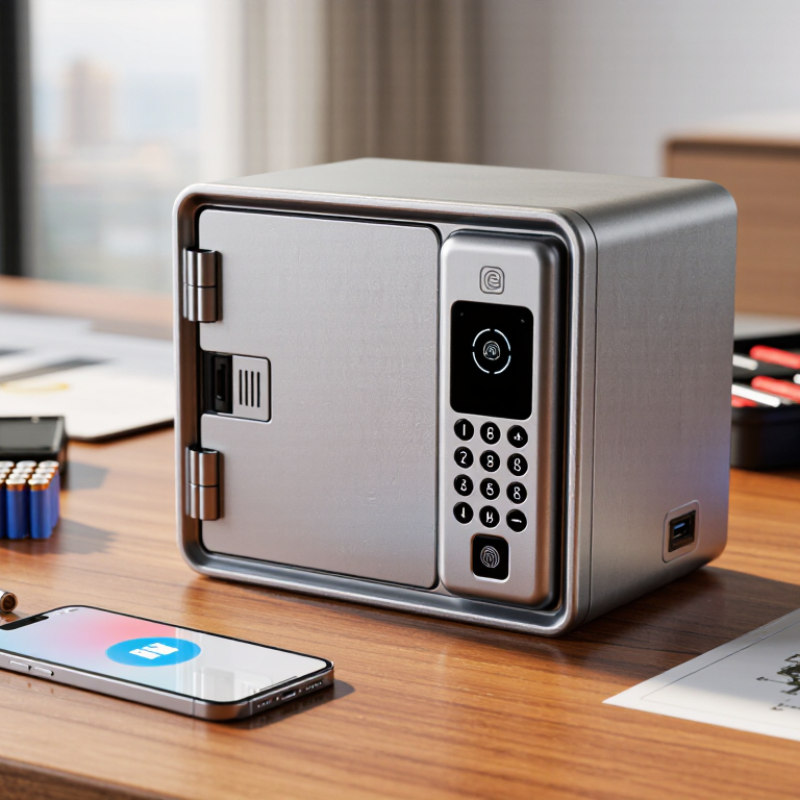
Smart lockboxes combine a secure enclosure with electronic access control. Common types include portable key boxes, wall-mounted units, parcel boxes, and cabinet-style models. Access may use PIN codes, Bluetooth, Wi-Fi, RFID, or temporary mobile credentials.
Their use cases are practical: property viewings, hotel housekeeping, equipment sharing, construction sites, and controlled key handovers. Grand View Research estimates the global smart lock market will grow strongly through 2030, with connectivity and remote management driving adoption. However, market reports define “smart lock” differently, so buyers should treat headline figures carefully.
For a global top 10 supplier scope, selection should examine more than price and product appearance. Important checks include enclosure strength, weather resistance, battery life, offline access, audit records, firmware support, API availability, and regional certifications.
A box installed outside a coastal building faces corrosion, weak signals, and repeated code entry. Suppliers should also provide multilingual manuals, spare parts, stable lead times, and clear warranty terms. MarketsandMarkets identifies integration and access management as major growth factors, yet a neat specification sheet does not prove field reliability.
I would request sample testing before approving large orders.
Tips: Test access during network failure. Measure battery performance in cold conditions. Ask for independent IP and impact-test documentation. Compare total ownership cost, not only unit price.
The right supplier is the one that supports deployment after shipment, although this is often the least documented part of a quotation.
How to Rank 10 Suppliers Using 6 Core Buying Criteria and Total Cost
Top 10 Smart Lockbox Suppliers for Global Buyers
Ranking ten smart lockbox suppliers requires more than comparing factory prices. MarketsandMarkets reported that the global smart lock market could grow from about USD 2.2 billion in 2023 to USD 4.4 billion by 2028. This growth increases supplier choice, but also increases evaluation risk. I would score each supplier across six criteria: security design, certifications, access control, connectivity, physical durability, and after-sales support. A 100-point model works well: security receives 25 points, while the other criteria receive between 10 and 20 points.
Test evidence matters. Ask for attack-resistance results, ingress protection ratings, battery-cycle data, and software update policies. Look for independent certification, not only factory claims. ABI Research has identified stronger demand for connected access systems, yet connectivity can create hidden expenses. Cellular service, gateway hardware, application maintenance, and replacement batteries should appear in the quotation. Small costs accumulate.
Use total cost of ownership over three or five years. Include purchase price, shipping, installation, training, support, failed units, and disposal. A cheaper lockbox may lose its advantage after two battery failures or one replacement shipment. Suppliers should provide clear response times and spare-part availability. That sounds basic. It is not.
For the final ranking, calculate each supplier’s weighted score, then subtract annual operating costs. I would also inspect ten sample units under heat, rain, dust, and repeated access cycles. One weakness remains: supplier data is rarely perfectly comparable. My scoring model may reward polished documentation over real durability. Buyers should record that uncertainty instead of hiding it.
Top 10 Smart Lockbox Suppliers for Global Buyers - How to Rank 10 Suppliers Using 6 Core Buying Criteria and Total Cost
Anonymous procurement benchmark for a 100-unit pilot order. Scores use six weighted buying criteria: security and access control (25%), reliability and durability (20%), compliance and documentation (15%), connectivity and integration (15%), total cost (15%), and service capability (10%).
Calculation basis: Estimated landed cost per unit equals unit price plus freight and insurance plus tooling allocation for a 100-unit pilot order. The benchmark excludes local taxes, import duties, cloud subscriptions, installation, payment fees, and volume rebates. Product specifications, certification documents, warranty terms, and connectivity compatibility should be validated during RFQ and sample approval.
Security Benchmarks: AES-256, IEC 60529 IP65, and Audit-Log Capacity
Choosing among the top 10 smart lockbox suppliers requires more than comparing prices. Security claims should be tested against clear, measurable benchmarks. AES-256 is valuable when protecting stored access records and configuration data. Ask how encryption keys are generated, stored, rotated, and recovered. A strong algorithm cannot repair careless key management.
Look for IEC 60529 IP65 certification when the lockbox faces dust or water jets. IP65 does not mean waterproof immersion. A loading dock may expose the unit to windblown grit, hose spray, and muddy gloves. Request laboratory reports, test conditions, and certificate numbers. Real installation experience matters here. Seals can age, and damaged covers may reduce protection.
Audit-log capacity also deserves close inspection. A practical unit should record user identity, time, access result, and unusual attempts. Check whether logs remain readable during network outages. Confirm retention periods, export formats, time synchronization, and tamper alerts. Some suppliers advertise large storage figures but omit event detail. That is a warning sign.
Test the workflow.
During evaluation, compare firmware update controls, administrator permissions, and recovery procedures. Independent penetration testing adds credibility, although it does not guarantee perfect security. Ask suppliers to demonstrate a sample log export and a failed-access alert. I would also inspect the hinge, keypad response, and battery compartment in cold conditions. Specifications can look excellent on paper. Field performance may still disappoint.
Connectivity Comparison: Bluetooth 5.0, Wi-Fi, NFC, and 4G Access
Top 10 Smart Lockbox Suppliers for Global Buyers: Connectivity Comparison
Connectivity determines whether a smart lockbox feels dependable or frustrating. Bluetooth 5.0 works well within short range, especially for apartment entrances, offices, and serviced properties. It usually reduces battery drain and supports direct phone access. Bluetooth SIG’s 2024 market update projects annual Bluetooth device shipments to rise from about 5.1 billion in 2023 to 7.5 billion by 2028. That scale supports broad component availability, but signal performance still depends on walls, metal doors, and phone compatibility.
Wi-Fi enables remote control, activity alerts, and cloud-based access without nearby users. It suits fixed locations with stable power and a strong router. However, constant connectivity can shorten battery life. NFC is different. It offers tap-based access at very close range, often with minimal setup and strong user privacy. It is practical for controlled entry, but less flexible for remote management. Suppliers should disclose supported NFC standards, read distance, and offline behavior.
4G provides wider coverage for outdoor cabinets, delivery points, and sites without local internet. GSMA Intelligence reported that 4G represented roughly 60% of global mobile connections in 2023, although regional coverage varies sharply. This option adds modem, SIM, and data costs. In field testing, connectivity failures rarely come from one cause. Weak reception, expired credentials, and poor app design can matter more than the radio standard. Buyers should request battery tests, network-band compatibility, encryption details, and failure procedures. Marketing claims are not enough.
Global Compliance Checks: CE, FCC, RoHS, UL 294, MOQ, and Warranty Terms
Top 10 Smart Lockbox Suppliers for Global Buyers
When comparing the top 10 smart lockbox suppliers, compliance evidence should come before pricing. Ask for current CE, FCC, and RoHS documents matching the exact model number. CE supports European market requirements, while FCC relates to radio emissions in the United States. RoHS confirms restricted substances are controlled. UL 294 can strengthen confidence in access-control safety, but its relevance depends on the product design and target market. A polished certificate is not enough. Check the issuing laboratory, test date, firmware version, and product label.
Tips: Request one sample before placing a bulk order. Test keypad response, battery warnings, emergency power, hinge strength, and mobile connectivity. Record results at low temperatures and after repeated opening cycles. Confirm the MOQ in writing, including packaging, logo changes, and custom colors. Some suppliers quote a low MOQ for standard units, then increase it for customization. That detail is easy to miss.
Warranty terms need equal attention. Look for coverage length, replacement procedures, shipping responsibility, and exclusions for water damage or battery leakage. A 24-month warranty may sound strong, yet slow claim handling can reduce its value. Ask how quickly spare parts ship and whether remote diagnostic support is available. I would also question vague statements such as “global certification.” Requirements differ by destination, and one document rarely covers every market. Suppliers that provide traceable reports, clear MOQ schedules, and practical after-sales procedures usually deserve closer technical review.