China Top 10 Fingerprint Safe Manufacturers?
Choosing a reliable Fingerprint Safe manufacturer requires more than comparing product photos or advertised prices. This guide examines ten Chinese manufacturers through practical, verifiable criteria, including production experience, fingerprint sensor performance, steel construction, locking accuracy, battery design, and quality-control procedures. Factory capacity matters. So does consistency.
The selection also considers OEM and ODM experience, export support, warranty policies, and responsiveness after delivery. A safe may open quickly in a showroom, yet perform differently after thousands of fingerprint scans. Small details matter, such as sensor recognition under dry fingers, emergency power access, hinge strength, and interior lining. These features affect daily confidence.
Information is drawn from public company materials, product documentation, industry experience, and available customer feedback. Where evidence is limited, that limitation should be acknowledged rather than hidden. No ranking is perfect. A manufacturer serving hotels may not suit a home office, while a large exporter may not provide the most flexible customization. Buyers should verify certifications, factory addresses, testing records, and after-sales terms directly before placing an order.
This overview is not a legal or security guarantee. It is a practical starting point for responsible sourcing and product comparison. The goal is clear: identify manufacturers with credible capabilities, transparent communication, and safer design practices. Expectations should remain realistic. Fingerprint technology can fail occasionally, so dependable backup access and clear user instructions still matter.
What Is a Fingerprint Safe and How Does It Work?
What Is a Fingerprint Safe and How Does It Work?
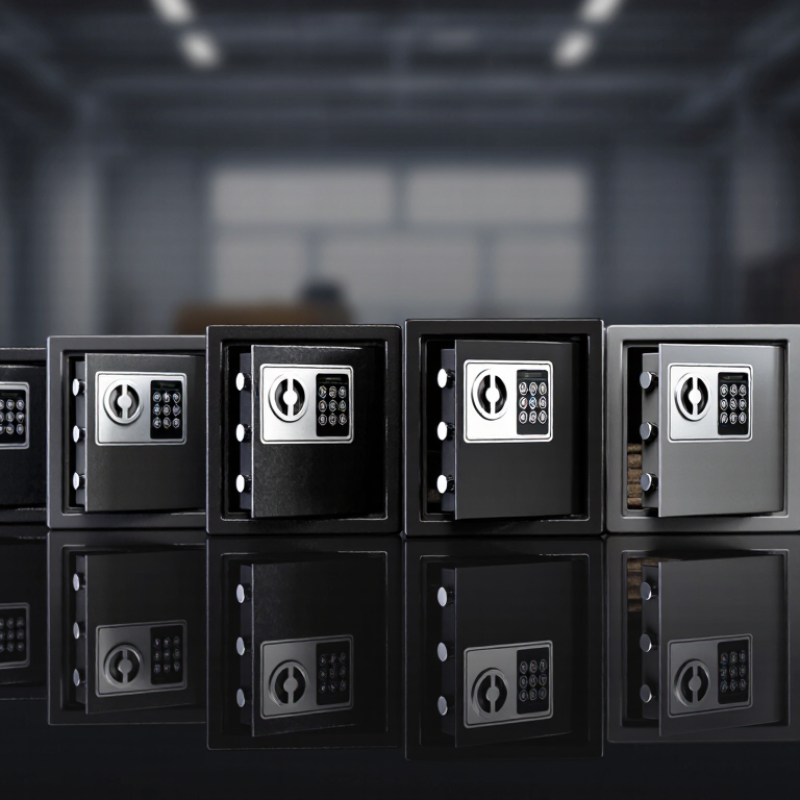
A fingerprint safe is a compact security box that uses biometric recognition instead of a traditional key. Its electronic scanner reads the unique ridge pattern on an authorized finger. The safe then compares that scan with encrypted data stored in its internal memory. If the patterns match closely enough, a small motor releases the locking bolts. Most models also include a keypad, emergency power connection, or backup key system.
The process begins when an owner registers one or more fingerprints. Several scans are usually required because fingers move slightly during daily use. During access, the sensor captures a new image and checks key points, such as ridge endings and patterns. Optical sensors use light and a camera, while semiconductor sensors detect surface details electronically. Both designs can work well, but performance depends on sensor quality and software calibration.
Real-world conditions matter. Wet, dusty, oily, or damaged fingers may reduce recognition accuracy. Low batteries can also slow the lock or disable scanning. No biometric lock is flawless. A backup method remains important. Users should mount the safe firmly, replace batteries on schedule, and test access before storing valuables. Fingerprint data is convenient, yet it is not magically invisible or impossible to misuse. That limitation deserves attention when comparing manufacturers and technical specifications.
China Top 10 Fingerprint Safe Manufacturers? – What Is a Fingerprint Safe and How Does It Work?
| No. | Evaluation Dimension | Typical Technical Fact | Why It Matters |
|---|---|---|---|
| 01 | Fingerprint Recognition Method | Most modern fingerprint safes use capacitive or optical sensors to capture fingerprint features and compare them with stored templates. | The sensor type affects recognition reliability, resistance to surface contamination, power consumption, and cost. |
| 02 | Fingerprint Matching Process | The controller converts fingerprint characteristics into a digital template and checks a new scan against authorized templates before releasing the lock. | The safe does not normally store a complete photographic image of a fingerprint; it uses biometric reference data for matching. |
| 03 | Access Capacity | Consumer models commonly support several registered fingerprints, while the exact capacity depends on the controller and product design. | A higher enrollment capacity is useful for shared household, office, hotel, and rental-property applications. |
| 04 | Backup Entry Options | Common backup methods include a keypad code, mechanical override key, emergency power interface, or an approved combination of these methods. | Backup access is important when batteries are depleted, a finger is injured, or the sensor cannot read a fingerprint. |
| 05 | Power Supply | Battery-powered designs are common, with low-battery alerts and an external emergency power solution available on some models. | Buyers should confirm battery access, warning behavior, replacement procedure, and emergency opening instructions. |
| 06 | Locking Mechanism | Fingerprint authorization usually activates a motorized bolt, solenoid, or electronically controlled latch. | The biometric sensor is only one part of the security system; bolt strength, door construction, and internal mounting also matter. |
| 07 | Construction Materials | Steel is widely used for safe bodies and doors, while thickness, reinforcement, hinges, and anti-pry features vary by model. | Material grade alone does not define security; the complete door-and-body structure should be evaluated. |
| 08 | Tamper Protection | Many electronic safes include failed-attempt lockout, audible alarms, internal tamper detection, or delayed opening functions. | These features can slow unauthorized attempts and provide a warning when repeated incorrect credentials are entered. |
| 09 | Installation and Anchoring | Freestanding safes may include pre-drilled anchoring holes for fixing to a floor, wall, shelf, or cabinet, depending on their design. | Correct anchoring helps prevent unauthorized removal and is especially important for compact, lightweight units. |
| 10 | Testing, Documentation, and Support | A reliable manufacturer should provide clear operating instructions, battery and override procedures, product traceability, warranty terms, and applicable test documentation. | Documentation makes installation and emergency access safer, while transparent testing information helps buyers compare products without relying only on marketing claims. |
Note: Specifications vary by model and production batch. Buyers should verify the exact fingerprint capacity, lock type, materials, certifications, battery system, and anchoring instructions before purchase.
Related Posts
-

7 Reasons Why Fingerprint Safe Solutions are the Best Choice for Your Security Needs
-
Top 10 Biometric Entry Systems That Enhance Security Today?
-

Exploring Innovative Alternatives to the Best Biometric Device for Global Buyers
-

Top Face Recognition Devices to Watch in 2025 and Beyond
-

5 Essential Advantages of Implementing a Biometric Security System in 2024
-

Top 10 Benefits of Biometric Security Systems You Need to Know!