What is a strong base anion resin and how does it work?
strong base anion resins play a crucial role in water treatment and chemical processing. According to a recent market report, the demand for anion exchange resins increased by 5.6% annually from 2019 to 2023. These resins are designed to remove negatively charged ions from solutions. Experts believe that their efficiency can greatly impact industries that rely on pure water.
Dr. Robert Hall, a leading authority in ion exchange technology, stated, "The right choice of strong base anion resin can significantly enhance purification processes." His insights reflect a growing recognition of the importance of resin selection in achieving optimal results. Yet, there are challenges to consider. Each resin type has its specific applications, and misuse can lead to ineffective treatment and higher costs.
Moreover, proper regeneration is vital for maintaining resin performance. Failing to do so can result in poorer ion exchange capacity over time. As the industry evolves, it's essential to stay informed about the latest developments in strong base anion resin technology. With careful evaluation and application, significant performance improvements are possible. Nonetheless, ongoing research is necessary to optimize effectiveness and address potential pitfalls in the process.
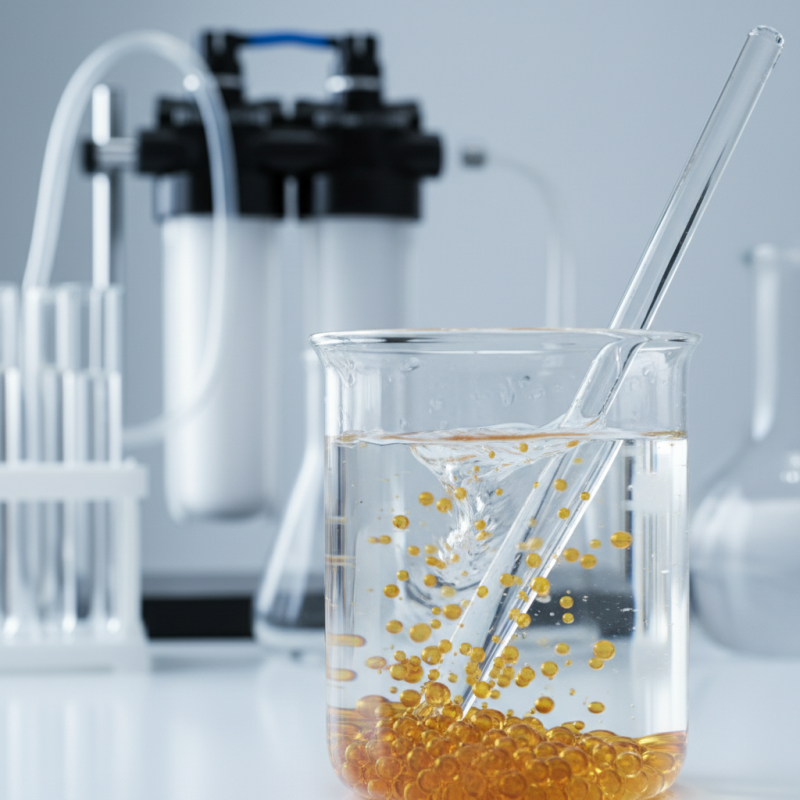
Definition and Characteristics of Strong Base Anion Resins
Strong base anion resins are synthetic materials used for water treatment. They play a crucial role in removing unwanted anions from water. These resins are made from a polymer backbone that is functionalized with quaternary ammonium groups. This structure allows them to interact effectively with negatively charged particles.
These resins can handle high pH levels, which makes them useful in various applications. They are efficient in removing contaminants like nitrates, sulfates, and phosphates. As a result, they are essential in industries that require high-purity water. The exchange process involves the resin attracting anions while releasing hydroxide ions. This balance contributes to water quality improvement.
**Tip:** When using strong base anion resins, monitor the flow rates closely. High flow rates can lead to incomplete exchange.
The effectiveness of these resins can vary based on the specific application. Factors such as temperature, pH, and the concentration of the target anions impact performance. It’s important to consider these variables to ensure optimal results. Regular testing of the treated water can help assess the efficiency of the resin.
**Tip:** Always check the resin’s condition periodically. Unsustainable use can reduce its life and efficiency.
Mechanism of Action in Ion Exchange Processes
Strong base anion resins are crucial in water treatment processes. They are designed to remove negatively charged ions from solutions. Their function relies on ion exchange, where anions in the water are swapped with hydroxyl ions from the resin.
During ion exchange, contaminants like sulfate or nitrate bind to the resin. This happens through electrostatic attractions. The resin captures harmful ions while releasing harmless hydroxyl ions. The process can be repeated multiple times until the resin loses efficiency, requiring regeneration.
Tip: Regular monitoring is essential. Replace or regenerate the resin timely to maintain optimal performance.
Water quality greatly affects the resin's lifespan. Factors like temperature and pH can impact the ion exchange process. Adjustments may be needed to ensure effectiveness. Experimenting with different conditions can yield better results.
Tip: Keep a log of conditions. This helps identify the optimal settings for ion exchange efficiency.
Applications of Strong Base Anion Resins in Water Treatment
Strong base anion resins play a crucial role in water treatment. These resins are effective in removing unwanted anions from water. They are used widely in deionization processes. The resins contain quaternary ammonium groups that attract and hold onto anions. This mechanism allows for efficient purification and mineral management in various water sources.
In municipal water treatment, strong base anion resins help in reducing impurities. They target substances like chloride, sulfate, and nitrate ions. Removing these contaminants improves water quality significantly. However, the effectiveness of these resins can vary. Factors like temperature and flow rates affect performance. It might take trial and error to find the best conditions for specific applications.
In industrial settings, strong base anion resins assist in reclaiming wastewater. This process involves complex methodologies. Batch processing versus continuous operations can yield different results. Workers must monitor the saturation of the resin regularly. Otherwise, the performance might deteriorate. Despite occasional setbacks, their role remains vital in ensuring clean water supplies.
Comparison with Weak Base Anion Resins and Their Uses
Strong base anion resins are versatile tools in water treatment processes. These resins efficiently remove positively charged ions from solutions. They work through a process called ion exchange, where anions in water are replaced by hydroxyl ions on the resin. This creates a highly reactive medium. They are particularly useful for deionization, a crucial step for many industrial applications.
In contrast, weak base anion resins operate differently. They only partially ionize in water. This means they are less aggressive in removing anions compared to their strong-base counterparts. They perform well in specific conditions, like low pH environments. The choice between strong and weak base resins often hinges on the specific requirements of the application.
For instance, strong base resins can handle a broader range of contaminant types and concentrations. However, they might not be the best choice if environmental conditions are unstable. Sometimes, weak base resins prove more effective for specific ions. Understanding the strengths and limitations of each type is crucial for effective water treatment. Making the right choice can save time and resources in the long run.
Comparison of Strong Base Anion Resins and Weak Base Anion Resins
Strong base anion resins generally have higher ion exchange capacities compared to weak base anion resins. This chart illustrates the difference in ion exchange capacity between the two types of anion resins, highlighting the advantages of using strong base anion resins in various applications such as water treatment and chemical processing.
Maintenance and Regeneration of Strong Base Anion Resins
Strong base anion resins are crucial in water treatment processes. They help remove unwanted ions from water. But, like all materials, they require proper maintenance and regeneration to function effectively. Without regular care, their performance can decline.
Regular maintenance involves monitoring the resin's condition. Checking for color changes or hardness can indicate a need for treatment. Often, resins can lose effectiveness over time due to saturation. A simple test can determine if they need replenishment. Many users overlook this essential step, leading to subpar water quality.
Regeneration is necessary to refresh the resin's capacity. This often involves rinsing them with a concentrated salt solution. The salt recharges the resin, allowing it to continue its job efficiently. However, this process requires careful control. Overdoing it can damage the resin and reduce its lifespan. Many people fail to find the right balance here, which is a common mistake. Revisit these steps regularly for the best outcomes.