Why Do Police Vans Use Sirens for Emergency Response?
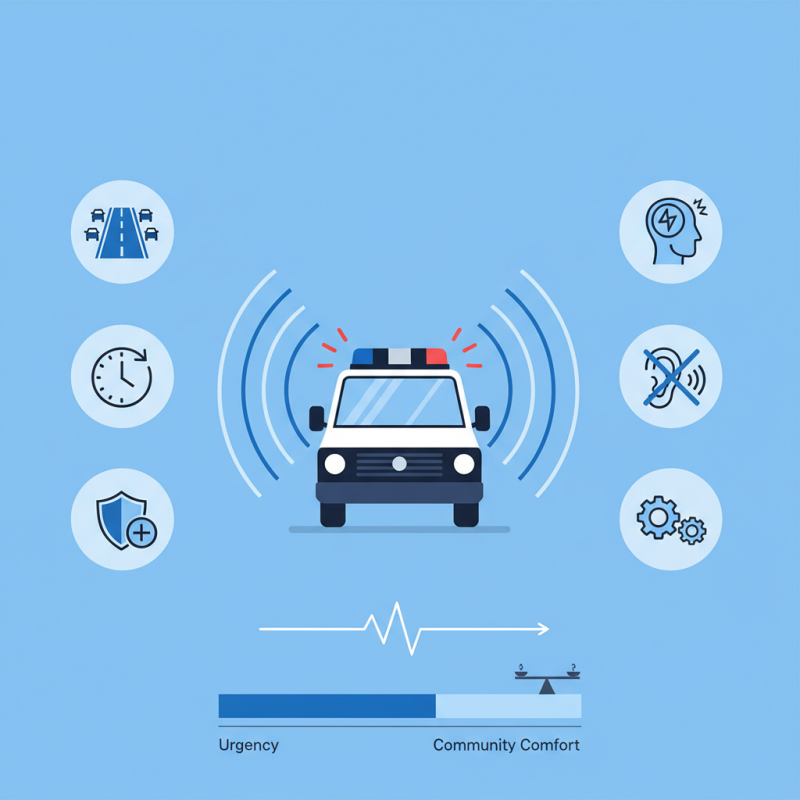
Emergency response is essential in maintaining public safety. The sound of a Police Van Siren is a common indicator of urgency. It alerts citizens and other drivers to the presence of emergency services. This siren helps clear traffic, allowing police vans to reach their destinations more quickly.
The use of sirens has practical benefits. However, there are nuances to consider. High noise levels can lead to stress or panic among the public. Some may even ignore sirens over time, reducing their effectiveness. Thus, while the siren has a clear purpose, it is not without its complications.
In today’s fast-paced world, rapid response is crucial. Police vans rely on their sirens to cut through the chaos. Yet, it remains vital to explore the balance between urgency and community comfort. The debate surrounding the use of Police Van Sirens invites reflection on improving emergency response protocols.
The Purpose of Sirens in Emergency Response Vehicles
Sirens play a crucial role in emergency response. Their primary function is to notify the public of an approaching emergency vehicle. Research indicates that high-pitched sounds can be heard from farther away. In fact, sirens traveling at 120 decibels can be heard up to a mile away. This ensures that pedestrians and drivers move aside quickly.
The sound of a siren captures immediate attention. It triggers an instinctual response, prompting people to clear the path. Studies show that 70% of drivers fail to notice an emergency vehicle until it is quite close. Sirens cut through noise pollution effectively. They serve as a warning, making the surroundings safer for all.
However, the use of sirens is not without challenges. Some individuals may experience stress or anxiety due to the loud noise. Frequent use can lead to desensitization, diminishing the urgency over time. Strategies must be implemented to improve public awareness. Additionally, alternative alert systems, like lights, could supplement sirens for a more balanced approach.
History of Sirens and Their Evolution in Law Enforcement
The siren has a long and storied history in law enforcement. Early models appeared in the late 19th century. They were mechanical devices, often cumbersome and less effective. As cities grew, the need for better communication became clear. Police departments struggled to navigate busy streets.
In the 1920s, electric sirens emerged. They offered a louder, more effective way to alert the public. According to a 2019 report by the National Institute of Justice, 85% of police officers believe sirens improve response times. However, not all jurisdictions use them equally. Some communities express concerns about noise pollution.
The evolution of sirens reflects technological advancements, but challenges remain. Many police departments now adopt modern solutions, such as LED lights combined with audio alerts. Despite progress, issues persist. Some studies indicate that not all sirens are effective in dense urban areas. A siren that works well in one environment may be less effective in another. It’s a complex balance that continues to evolve.
How Sirens Enhance Public Awareness and Safety
Sirens on police vans play a critical role in emergency responses. Their loud noise alerts the public to potential danger. As they rush through city streets, these sounds help clear the way. People instinctively move aside when they hear them. This is a vital reaction that can save lives. In a bustling city, every second counts.
The sound of a siren also serves as a warning. It tells drivers to remain vigilant. Yet, not everyone reacts properly. Some may panic or stop abruptly. This can create unsafe situations. Additionally, some may become desensitized to the sound. Over time, this may reduce its effectiveness.
Beyond clearing the path, sirens raise awareness. They attract attention to ongoing situations. A flashing light combined with sound increases visibility. But the balance between alarm and distraction remains delicate. Too much noise can lead to frustration in daily life. Thus, understanding the purpose behind sirens is vital for community safety. Operators must use them judiciously, ensuring awareness without overexposure.
Legal Regulations Surrounding the Use of Sirens by Police
Police vans often emit loud sirens during emergency responses. This not only clears the way but also alerts civilians. Sirens are vital for quick commuting in urgent situations, like accidents or crimes in progress. However, their use is strictly regulated by law in many areas.
Legal frameworks dictate when and how sirens can be used. For instance, in some regions, sirens must only be activated when responding to emergencies. Misuse can lead to penalties for police officers, which is essential for maintaining public trust. The sound of a siren can cause anxiety or panic among others, reflecting on the urgent nature of the situation. But is the noise always necessary?
While sirens are crucial, their frequent use raises concerns. Are there times when they can be avoided? Balancing the urgency of a situation with public tranquility is tricky. Officers must make quick decisions on when to engage them. Each situation is different, and reflection may lead to improved practices.
Alternative Technologies in Emergency Response Communication
Police vans often use sirens during emergency responses. These loud sounds help alert the public to clear a path. However, sirens can also create chaos. Some people panic when they hear the noise, leading to unpredictable reactions.
Alternative technologies are being explored for emergency communication. Visual signals can be beneficial. Bright lights or digital displays can alert people without causing alarm. Yet, these methods may lack the immediate impact of sirens. Additionally, not all individuals notice visual cues.
The effectiveness of sirens raises questions. Are they truly the best way to communicate urgency? In crowded areas, sirens may compete with other noises. This introduces confusion. As technology evolves, the integration of multiple methods could provide better solutions. Yet, finding the right balance remains a challenge.
Emergency Response Communication: Sirens vs. Alternative Technologies