Choosing an MCCB Circuit Breaker is not just a matter of matching the ampere rating on a machine label. Buyers also need to consider system voltage, available fault current, pole configuration, and the protection required by the connected equipment. A breaker that fits the panel may still be unsuitable for the load. Small details matter.
Start with the installation itself. A workshop motor, a commercial distribution board, and a backup generator can place very different demands on a breaker. Check the manufacturer’s data sheet for rated current, interrupting capacity, trip characteristics, terminal limits, and approved accessories. Compare those figures with the system design and measured operating conditions, rather than relying on a product photo or a low price. When fault-current calculations or coordination requirements are unclear, ask a qualified electrical professional to review them.
The seven buying tips in this guide focus on practical checks: selecting the right rating, confirming breaking capacity, understanding trip units, checking compatibility, and reviewing build quality and support. They also encourage buyers to examine installation conditions, such as heat, dust, and available panel space. A specification can look perfect on paper. Reality is less tidy. Even experienced buyers can overlook a detail, so verify key values against current product documentation before ordering. These checks help narrow the options and support a safer, better-informed purchase.
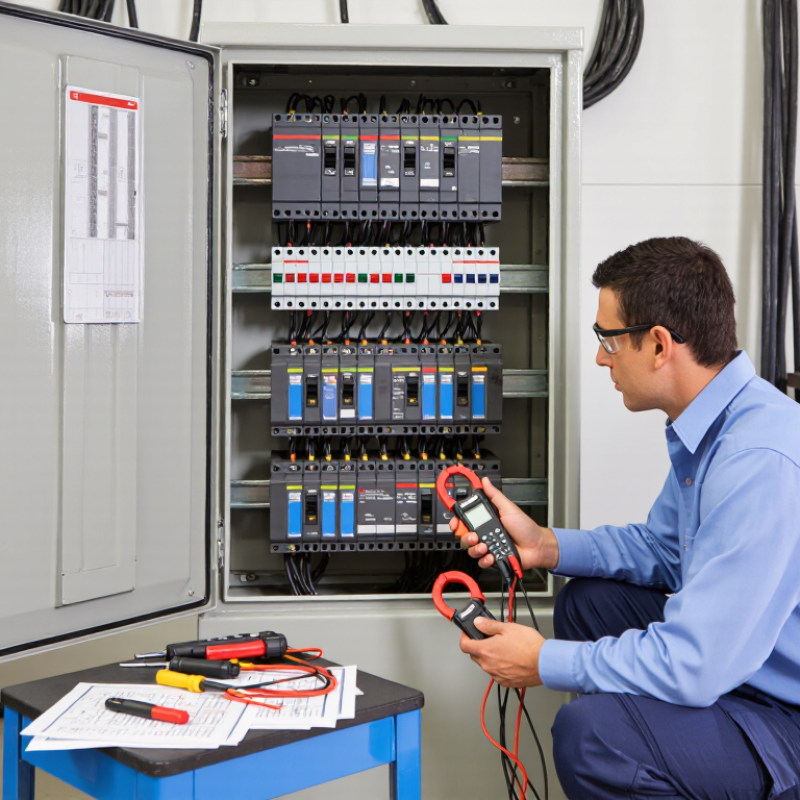
An MCCB, or molded-case circuit breaker, interrupts current when an overload or short circuit exceeds its trip settings. Its role is practical: limit damage to conductors and equipment before excessive current causes overheating. Some models use thermal-magnetic trips; others offer electronic settings for more precise coordination. The right choice depends on the circuit, not just the number printed on the panel.
NFPA’s 2021 Home Structure Fires report estimated that electrical distribution and lighting equipment was involved in an average of 32,000 reported U.S. home structure fires each year from 2015 to 2019. Those figures cover many kinds of equipment and do not measure MCCB performance specifically. Still, they show why correctly selected protection matters. An MCCB does not replace grounding, arc-fault protection, or sound installation practices.
For buyers, compare rated current, rated voltage, pole count, and interrupting capacity with the system’s available fault current. Check trip settings and coordination with upstream and downstream devices, too. A high current rating alone proves little. It is easy to focus on frame size and overlook the full installation; that deserves a second look. Always verify the device’s ratings against the equipment documentation and have a qualified professional review the application.
Start with the actual load, not just the equipment nameplate. List each connected device, its rated current, and how long it runs. Motors, transformers, and other inductive loads can draw brief starting currents that exceed normal operating levels. Account for those peaks when checking the MCCB’s trip characteristics; nuisance trips are frustrating, but simply raising a setting can leave conductors inadequately protected. Small details matter.
Next, match the breaker’s rated operational voltage to the system voltage and configuration. Check whether the circuit is single-phase or three-phase, and confirm the required number of poles. A panel label may not tell the whole story, especially after equipment changes. Verify the supply at the installation point and consult the equipment documentation. It is easy to overlook a changed voltage assumption.
Short-circuit capacity needs equal attention. Ask a qualified electrical professional to determine the prospective fault current where the breaker will be installed. The MCCB’s interrupting rating must meet or exceed that value at the applicable voltage. Also consider coordination with upstream and downstream protective devices, so a fault is isolated as locally as practical. Keep the calculation and assumptions with the project records; estimated values can age poorly when the distribution system changes.
Pole count should match the circuit, not just the breaker space available. A single-phase feeder may need two poles, while a three-phase motor circuit commonly uses three. Some systems also require a switched neutral; verify the wiring design and local equipment requirements. Pole count matters. A mismatch can leave part of a circuit energized during isolation.
Trip settings need to protect the conductors and connected equipment while tolerating normal operating conditions. For example, a pump motor may draw a brief starting current that would nuisance-trip an overly sensitive setting. Compare the breaker’s adjustable thermal and magnetic—or electronic—functions with the load profile and conductor rating. Don’t set protection by guesswork. Coordination with upstream and downstream devices can also affect which breaker trips during a fault, so review the manufacturer’s time-current curves.
Breaking capacity is not the same as the breaker’s normal current rating. It describes the short-circuit current the device can safely interrupt at a specified voltage. Check the prospective fault current at the installation point, then confirm the breaker’s interrupting rating meets or exceeds it. This figure can be easy to overlook on a crowded panel schedule. If the fault level or system voltage is uncertain, have a qualified electrical professional verify the selection before purchase.
Compare illustrative pole counts, trip settings, and ultimate breaking capacity (Icu) at 400 V AC.
More poles allow more conductors to be switched; trip settings should suit the circuit’s load and protection requirements. Icu is the maximum fault current a breaker can interrupt under specified test conditions. Values shown are representative examples, not product specifications—verify the voltage, trip range, and breaking-capacity ratings on the relevant datasheet.
Start with the applicable product standard. IEC 60947-2 covers low-voltage circuit breakers, including MCCBs; verify the unit’s rated voltage, current, and short-circuit breaking capacity against the project specification. These values are not interchangeable. A breaker’s interrupting rating must meet or exceed the prospective fault current at its installation point. Ask for the test certificate and technical datasheet, not just a catalogue headline.
Operating conditions can change performance. Check ambient temperature, altitude, enclosure ventilation, and expected load cycles. Heat inside a crowded panel may require derating, while high altitude can affect cooling and insulation.
Small details matter. NFPA’s Electrical Fires report estimates an annual average of 46,700 U.S. home fires involving electrical failure or malfunction during 2015–2019. That figure does not mean MCCBs prevent every such fire, but it reinforces the value of correct protection coordination and sound installation.
Before ordering, compare trip settings with cable capacity and downstream equipment needs. Confirm whether adjustable overload and instantaneous settings are required, and check selectivity with upstream devices. Measure the panel space, busbar arrangement, terminal orientation, and required conductor size. Installation instructions specify tightening torque and clearances; follow them with a calibrated tool. One practical oversight: replacement breakers may fit the cutout but still mismatch the busbar or fault rating. Verify the complete assembly and leave room for safe inspection and future maintenance.
Choosing an MCCB is not just a matter of comparing current ratings. A capable supplier should ask about load type, prospective fault current, enclosure, ambient temperature, and installation conditions. That conversation helps show whether the selection fits the panel, not merely the quotation. Ask for the exact model datasheet, dimensional drawing, installation instructions, and trip-unit details. Check that rated current, breaking capacity, voltage, pole count, and accessories match your specification. Details matter. Request test reports and certificates relevant to the product and destination, then confirm that model numbers and document revisions align. A tidy PDF can still hide a mismatch.
Look beyond the sale price. Ask about lead times, warranty terms, replacement accessories, fault diagnosis, and technical response times before ordering. Useful support is specific: a clear contact route and answers grounded in manuals or test data. MCCB coordination should be reviewed by a qualified engineer against the connected system. During commissioning or a trip, record settings, fault conditions, and panel details; these help support staff investigate the issue. Keep those records. It is easy to overvalue a quick quote; speed alone does not prove a supplier understands your application. If answers remain vague, pause and ask for clarification.
7 MCCB Circuit Breaker Buying Tips for Buyers - Assessing Suppliers, Product Documentation, and Ongoing Support
| No. | Buying Tip | What to Assess | Documentation to Request | Ongoing Support to Confirm | Practical Buyer Check |
|---|---|---|---|---|---|
| 1 | Confirm the applicable standard | Check that the breaker is designed and tested to the standard required for the installation and market. IEC 60947-2 and UL 489 are commonly used standards for circuit breakers, but they are not interchangeable approval claims. | Request the applicable certificate or listing information, the exact model designation, and the standard edition or certification scope. | Confirm that technical staff can help verify approvals for the intended jurisdiction and application. | Match the nameplate and certificate details to the exact breaker configuration being quoted. |
| 2 | Match ratings to the electrical system | Verify rated operational voltage, rated current, number of poles, frequency where relevant, and the required short-circuit breaking capacity. Breaking capacity must be suitable for the prospective fault current at the installation point. | Request a complete rating table and clarify the meaning of listed values, including any IEC Icu and Ics ratings or applicable UL interrupting ratings. | Ask whether application engineers can review system voltage and available fault-current information before selection. | Compare the breaker’s marked ratings with the design documents and the calculated or specified fault level. |
| 3 | Select the right trip unit and settings | Choose a thermal-magnetic or electronic trip unit according to protection needs. Confirm adjustable long-time, short-time, instantaneous, or ground-fault functions only where the selected model provides them. | Request trip curves, setting ranges, trip-unit instructions, and any required configuration or testing guidance. | Confirm access to support for setting review, commissioning questions, and replacement trip-unit compatibility. | Have a qualified electrical professional check settings against conductor protection, load requirements, and the coordination study. |
| 4 | Review coordination and selectivity | Check coordination with upstream and downstream protective devices. Selectivity depends on device characteristics and system conditions; it should not be assumed from current ratings alone. | Ask for time-current curves and tested or published coordination tables applicable to the exact breaker combination and operating conditions. | Determine whether the supplier can assist with coordination studies or provide technical data for an independent study. | Compare curves and coordination data with the project’s protection requirements before purchase. |
| 5 | Check installation and environmental limits | Verify mounting method, terminal and conductor compatibility, enclosure clearances, ambient-temperature limits, and any derating requirements. Performance can vary with installation conditions. | Request the installation manual, dimensional drawings, connection details, terminal torque values, and applicable derating information. | Confirm that installation questions and commissioning support are available for the expected project schedule. | Check dimensions and connection details against the panel design and the conductor type and size. |
| 6 | Evaluate documentation and traceability | Ensure the quotation identifies the exact frame, poles, trip unit, accessories, and ratings. Clear identification reduces the risk of receiving an unsuitable configuration. | Request a datasheet, wiring or accessory information, installation instructions, test or inspection records where applicable, and product identification details. | Ask how technical revisions, replacement parts, and product inquiries are handled over the expected service life. | Keep the approved submittal and verify delivered labels and configuration against the purchase order. |
| 7 | Assess supplier reliability and lifecycle support | Consider technical response capability, delivery commitments, warranty terms, spare-part availability, and the process for handling quality issues. | Request written warranty terms, lead-time information, support contacts or service procedures, and a clear list of included accessories. | Confirm availability of troubleshooting assistance, replacement components, and guidance for inspection or maintenance. | Compare quotations on configuration, documentation, delivery, and support—not price alone—and retain the agreed terms. |