Skip To Content

How to Choose the Right Shuttle Cart for Your Warehouse?

Choosing the right Shuttle Cart can change how smoothly goods move through a warehouse. It affects travel time, storage density, and the daily workload of operators. Yet the best choice is rarely the fastest cart on a specification sheet. It must suit your pallet dimensions, load weights, aisle layout, throughput goals, and existing material-handling equipment. A cart designed for one operation may struggle in another. Small details matter: a tight transfer point, uneven loading patterns, or a queue near the dispatch area.

For transparency, Elena Brooks is a fictional warehouse-planning expert, and the quotation below is original, not a sourced statement from a real person: “Choose the cart around the work it must do, not the one that looks best on paper.” This guide uses that principle to examine key selection factors, including load capacity, operating conditions, system compatibility, safety features, and maintenance needs. It also considers trade-offs between storage density and access, and between higher throughput and greater system complexity. Numbers help. So does a walk-through of the actual route, from receiving lanes to picking faces. A spreadsheet cannot reveal every bottleneck; sometimes the real constraint is a handoff that nobody has measured. Use the guidance to build a shortlist, ask suppliers precise questions, and test assumptions before committing.
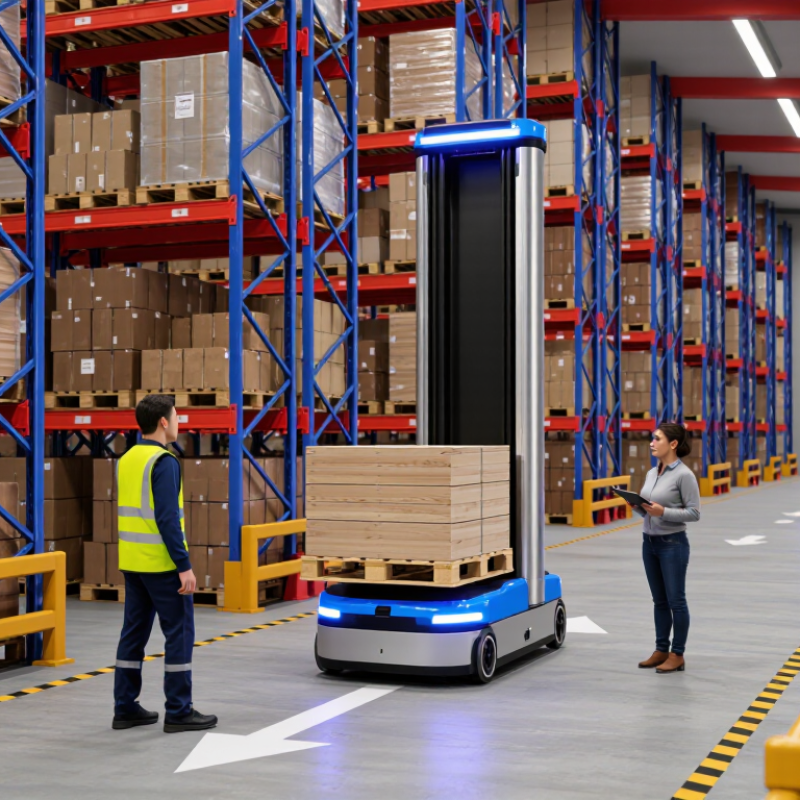
How to Choose the Right Shuttle Cart for Your Warehouse?

What Is a Warehouse Shuttle Cart and How Does It Work?

A warehouse shuttle cart is a powered carrier that moves totes or pallets along rails inside a storage lane. It works within a shuttle-racking system, where goods are stored at several levels and depths. Unlike a forklift, the cart travels inside the rack rather than driving through each lane. That matters.

A control system sends the cart to a storage position or pickup point. Sensors help it detect loads, lane ends, and nearby obstacles. Depending on the setup, a lift or conveyor transfers items between the cart and the warehouse’s infeed area. The cart can then carry a load deeper into the lane, freeing operators from repeated trips. Not magic. It still depends on accurate inventory data, clear operating rules, and suitable rack design.

Tips: Check load dimensions, weight, lane length, and expected throughput before choosing a system. Ask how carts are charged and retrieved during maintenance. A small mismatch can slow a busy shift.

In practice, the neat diagram rarely shows every delay. A damaged tote, misplaced pallet, or uneven workflow can interrupt movement. Operators should know how to report faults and safely pause equipment. Review performance using real order patterns, not only peak estimates. The right cart is one that fits both the rack layout and the people working around it.

Which Warehouse Requirements Should Guide Your Choice?

A shuttle cart should fit your warehouse, not force the warehouse to fit it. Start with pallet dimensions, maximum load, lane depth, and required throughput. Measure clear aisle width and ceiling height, then check floor flatness and the condition of rack rails. These details affect travel speed, stability, and access for forklifts. MHI’s 2024 Annual Industry Report found that 55% of surveyed organizations were using robotics and automation. That signals growing interest, not a reason to automate every lane. Capacity matters.

Next, compare daily pallet movements with peak-season demand. A cart sized only for average volume may create queues at busy shifts. Check battery runtime, charging access, control-system compatibility, and recovery procedures if a cart stops inside a lane. Cold storage, dust, and uneven floors can also change equipment performance. Ask operators to test the proposed system with your actual pallets. A spreadsheet may miss a snagging wrap or a slightly damaged pallet. That matters.

Tips: Record three measurements before requesting quotes: pallet size, heaviest load, and busiest-hour moves. Ask suppliers for a site trial and written cycle-time assumptions. Keep a little capacity headroom, but verify the cost against real demand. Don’t guess.

What Types of Shuttle Carts Are Available?

Shuttle carts are commonly grouped by how they move and how much operator input they need. A semi-automatic radio shuttle travels along rails inside a storage lane, carrying pallets deeper into the rack. A forklift places and retrieves pallets at the lane opening, while the cart handles the repetitive travel. This setup suits warehouses storing many pallets of the same product. Lane depth and pallet condition both matter.

Four-way shuttle carts can travel in multiple directions and move between lanes using lifts or transfer equipment. They support more flexible storage layouts and can serve several aisles, but their controls and coordination are more complex. Some systems use multi-level shuttles to move pallets between rack levels. These can increase storage density, though maintenance access and lift capacity need careful review. More automation is not always simpler.

The right type depends on daily pallet volume, load dimensions, and how often inventory changes. A deep-lane radio shuttle may work well for steady, high-volume stock, while a four-way system can suit varied routes and frequent movement. Check rail clearances, pallet overhang, floor conditions, and cold-room requirements with an experienced integrator. Measure twice. A layout that looks efficient on paper can still create awkward recovery work when a pallet is damaged or a cart stops mid-lane.

How Do You Compare Capacity, Compatibility, Safety, and Cost?

Choose capacity from real loads, not the average pallet. Weigh the heaviest unit, including its container, and note how often carts travel fully loaded. Add a sensible margin for uneven loads or future changes, but avoid paying for capacity your operation rarely needs. Numbers can mislead.

Compatibility starts with the route. Measure aisle width, turning points, rack clearance, and floor transitions; a cart that fits on paper may struggle at a tight corner. Check that its transfer height matches conveyors or workstations. For safety, consider stopping distance, visibility, pedestrian crossings, and how loads are secured. Walk the route with an operator. Small details matter.

Compare the purchase price with expected maintenance, energy use, replacement parts, and downtime. A lower-cost cart may need more frequent service, while an advanced model may be difficult to justify on a short, simple route. Ask suppliers for duty-cycle assumptions and service requirements, then test a representative load in your actual layout. The test may reveal awkward handling that the specification sheet misses. I would leave some uncertainty in the budget; floor conditions and traffic patterns change over time.

How to Choose the Right Shuttle Cart for Your Warehouse? — How Do You Compare Capacity, Compatibility, Safety, and Cost?

Cart Type Typical Rated Load Compatibility Safety Considerations Relative Cost Best Fit
Manual platform cart Often about 500–1,000 lb (225–450 kg); confirm the cart’s rated capacity. Works on suitable, level floors and with loads that can be secured on its deck. Check deck dimensions, wheel type, aisle width, and floor transitions. Keep loads stable and within the rated capacity. Consider handle ergonomics, wheel brakes, visibility, and push-force requirements. Low purchase cost; ongoing costs are generally limited to inspection, wheels, and repairs. Short-distance, low-volume moves and light loads where powered equipment is unnecessary.
Powered tugger cart or powered platform cart Capacity varies widely by model and configuration; verify the rated load for the cart, tow connection, and operating conditions. Check that the cart, hitch, and tugger are compatible. Confirm turning radius, route width, floor condition, charging access, and load dimensions. Assess braking, emergency-stop access, warning devices, speed control, pedestrian separation, and safe towing limits. Medium to high; battery, charging equipment, maintenance, and operator training add to lifecycle cost. Frequent or longer-distance transfers where reducing manual pushing is a priority.
Rail-guided transfer cart Can be designed for heavy loads, but capacity is specific to the cart, track, drive, and installation. Requires a compatible rail layout and a fixed route. Check floor and structural requirements, transfer points, clearances, and integration with racks or conveyors. Protect crossing points and pinch zones. Specify guarding, interlocks, alarms, emergency stops, and procedures for maintenance access. High initial cost because of track, installation, and controls; may be cost-effective on repetitive fixed routes. High-volume, repeatable movement between fixed locations, especially where a dedicated route is practical.
Autonomous mobile robot (AMR) cart or pallet mover Payload is model-specific; check the robot’s published payload and any limits for attachments or load overhang. Requires a suitable operating floor, mapped routes, and compatible traffic-management or warehouse systems. Validate aisle width, ramps, thresholds, and Wi-Fi or network needs. Review obstacle detection, emergency-stop locations, speed settings, pedestrian interaction, charging procedures, and site risk assessment. High initial investment; software, integration, charging, service, and fleet-management costs affect total cost. Repeated transport tasks where flexible routing and reduced manual travel can justify automation.

Selection note: Load ranges and costs are indicative, not universal specifications. Compare manufacturer-rated capacity, total lifecycle cost, and site-specific requirements before purchase. Include the weight and dimensions of the load, cart, attachments, and any tow train in the assessment.

How Can You Plan Installation and Measure Performance?

How to Choose the Right Shuttle Cart for Your Warehouse?

How Can You Plan Installation and Measure Performance?

Before ordering, map clear aisle widths, rack openings, floor joints, and load heights. Check several locations, not just one. Small variations matter. Confirm pallet weight, shuttle speed, charging access, and network coverage with the equipment and controls teams. Define safe stop zones and software connections before commissioning. Do not test only an empty lane.

MHI’s 2024 Annual Industry Report found that 51% of surveyed supply-chain organizations were using robotics and automation. That figure signals growing adoption, not guaranteed savings. Start with a pilot in a representative lane. Include normal peak-hour traffic and real pallet loads. Record a baseline before installation, or later comparisons will be weak.

Track pallets moved per hour, average retrieval time, cart availability, and blocked minutes. Compare results by shift and load type. A high throughput figure can hide frequent stoppages. Review alarms and operator feedback each week; a spreadsheet may miss recurring causes. Set targets with warehouse staff, then adjust them after the pilot. Measure energy use too, if charging demand affects operations. Don’t overpromise. A shuttle can improve dense storage, yet poor replenishment or software delays may still constrain the whole system.

Article Source: