How to Choose Commercial Trash Cans for Your Business?
Choosing Commercial Trash Cans is a practical decision, not a minor purchasing task. A busy café may fill a 32-gallon container before lunch, while an office may need better recycling separation. Capacity, opening design, mobility, liner compatibility, and cleaning access all affect daily performance. Small details matter.
The U.S. Environmental Protection Agency reported 292.4 million tons of municipal solid waste generated in 2018, equal to about 4.9 pounds per person daily. Its National Overview of Facts and Figures on Materials, Wastes, and Recycling shows why waste planning cannot rely on guesswork. The World Bank’s What a Waste 2.0 report also estimated 2.01 billion tonnes of municipal waste globally each year. Commercial facilities contribute significantly through food scraps, packaging, paper, and disposable service items. Yet waste volumes differ sharply between industries.
William Rathje, founder of the Garbage Project, famously said, “There is no such thing as garbage, only resources in the wrong place.” His observation remains useful when evaluating Commercial Trash Cans. A color-coded station can guide behavior. A tight lid can reduce odors. Casters can prevent staff from lifting heavy loads.
Still, one assumption deserves testing. Bigger is not always better. An oversized bin may encourage contamination, wasted floor space, and infrequent cleaning. The right choice depends on measured waste volume, collection schedules, workplace traffic, and local recycling requirements. This guide examines those factors carefully, while recognizing that real operations are rarely perfect.
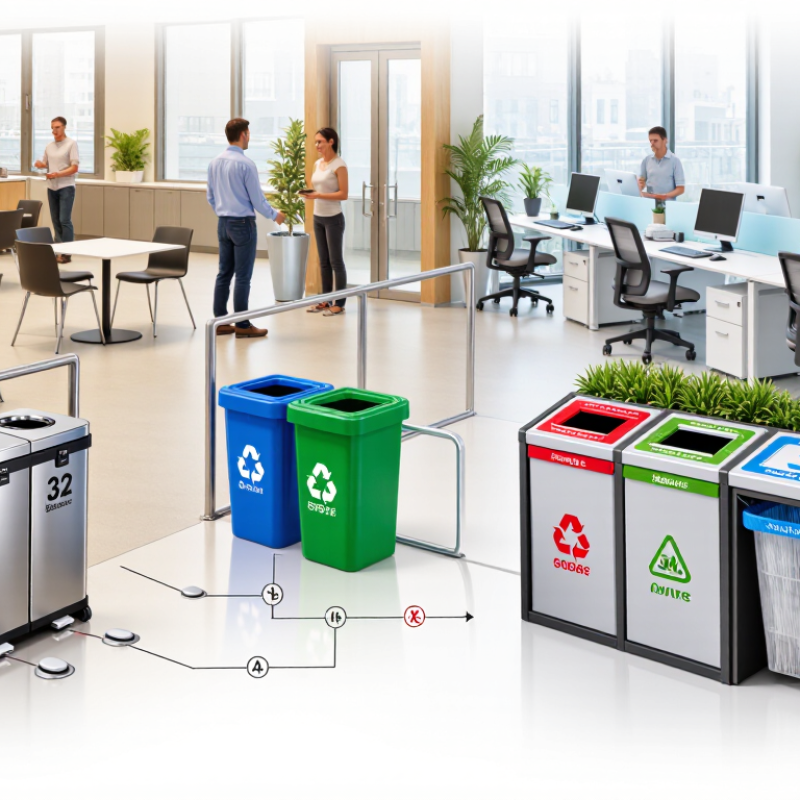
Define Your Business’s Waste Management Requirements
Choosing commercial trash cans should begin with your actual waste patterns, not appearance. Spend seven days observing what your business throws away. Record food scraps, packaging, paper, liquids, and general waste separately. Note busy periods, such as lunch hours or closing time. A small café may need several compact cans near preparation areas, while a warehouse may require fewer, larger containers.
Measure daily volume in bags or liters. Weight matters too. Wet waste can make a lightweight container difficult to move safely. Check where waste is created and how far employees must carry it. Containers near sinks may need tight-fitting lids and corrosion-resistant surfaces. Public areas may benefit from clear openings and stable, easy-to-clean designs. Your first estimate may be wrong. Real use often exposes hidden problems.
Tips: Choose capacity based on peak days, not average days. Leave some empty space for unexpected demand. Match each can with suitable liners, wheels, lids, and cleaning access. Labeling helps staff sort waste correctly, but unclear labels can create contamination. Review the setup after two weeks. Adjust locations or collection frequency when odors, overflow, or repeated spills appear.
Compare Commercial Trash Can Types and Materials
How to Choose Commercial Trash Cans for Your Business?
Compare Commercial Trash Can Types and Materials
Choosing a commercial trash can starts with the waste stream, not appearance. I have found that busy kitchens need different containers than quiet offices. Open-top cans suit dry, frequent disposal areas. They allow quick access but can expose odors and waste. Swing-top models hide contents and work well in customer-facing spaces. Step-on cans offer hands-free use near food preparation stations. Their pedals need regular inspection.
Rolling cans help move heavier waste across warehouses, restaurants, and outdoor service areas. Select sturdy casters for uneven floors. For recycling, divided containers can reduce sorting mistakes. Clear labels still matter. People often rush.
Material affects cleaning, durability, and total cost. Stainless steel resists corrosion and presents a polished appearance. It can show fingerprints, though. Galvanized steel handles demanding indoor or covered outdoor use, but damaged coatings may rust. High-density polyethylene is lightweight, impact-resistant, and easier to reposition. Polypropylene can also perform well in indoor settings, especially where moisture is common. Check the manufacturer’s temperature and chemical-resistance guidance before using cleaning agents.
My first specification focused too much on capacity. That was a mistake. A large can may become awkward beside a narrow prep table. Measure the available footprint, lid clearance, and service route. Match liner size carefully to the container. Loose liners leak; overfilled ones tear. Consider removable inserts, rounded corners, and smooth seams because these details reduce cleaning time. Local fire, sanitation, accessibility, and waste-handling requirements should guide the final selection.
Choose the Right Capacity, Size, and Placement
Choosing commercial trash cans starts with capacity, not appearance. The U.S. Environmental Protection Agency reported 292.4 million tons of municipal solid waste in 2018. That equals about 4.9 pounds per person daily. Your business may produce more during lunch hours, events, or seasonal peaks.
Estimate daily waste by reviewing collection records for two weeks. Then add 20% to 30% reserve capacity. A 32-gallon can may suit a small office, while a busy café may need several 44-gallon containers. Match each can to its waste stream. Food scraps, packaging, and general waste often need separate collection points. Do not rely on one oversized container. It may become heavy, unpleasant, and difficult to move.
Placement changes employee behavior. Put cans beside printers, preparation counters, entrances, and outdoor seating. Keep them close to the waste source, but away from door swings and narrow walkways. The Occupational Safety and Health Administration requires walking-working surfaces to remain orderly and sanitary. Local accessibility and fire-safety requirements also matter. Check them before installation.
Clear labels help, but placement matters more. A real-world mistake is hiding a recycling can behind a cabinet. People choose the nearest opening. Review fill levels weekly, especially after busy shifts. A spreadsheet can mislead. Watch the route, smell, overflow, and cleaning time. These details reveal whether the chosen capacity truly works.
How to Choose Commercial Trash Cans for Your Business
Choose the right capacity, size, and placement for daily waste collection.
Capacity
Use 60–120 liter cans for offices and retail areas, 240 liter cans for restaurants and busy service areas, and 660 liter containers for warehouses or high-volume operations.
Size
Allow enough clearance for opening lids, moving carts, and replacing liners. Measure doorways, service routes, and storage areas before purchasing.
Placement
Place cans near entrances, food-preparation zones, workstations, and other high-traffic points while keeping walkways, exits, and accessibility routes clear.
Set a Budget and Plan for Maintenance and Replacement
Choosing commercial trash cans starts with a budget that includes more than the purchase price. Measure daily waste from each work area for two typical weeks. Record overflow, liner use, cleaning time, and collection frequency. These details expose costs that a quick estimate misses. Leave a modest reserve for damaged lids, extra liners, and seasonal volume. A cheap unit may become expensive when staff clean spills repeatedly. I have found that busy entrances need sturdier, easier-to-clean containers than quiet offices.
Set a maintenance plan before installation. Assign one person to inspect each can weekly. They should check cracks, loose hinges, sharp edges, odors, and unstable bases. Use a simple log with the date, location, condition, and action taken. Wash high-touch surfaces more often during busy periods. Do not assume a full liner means the container needs replacement. Sometimes poor placement causes the problem. Moving a can closer to a preparation area may reduce spills and labor.
Plan replacement by condition, not by a fixed calendar alone. Replace containers when cracks persist, lids no longer close, or cleaning cannot remove embedded odors. Review replacement costs annually against repair hours and supply use. Keep identical sizes where practical, but avoid buying excess stock. Storage space also has a cost. My own planning has sometimes underestimated holiday waste and overestimated staff compliance. That uncertainty deserves a small buffer and a quarterly review. A written process makes decisions more consistent across shifts.
How to Choose Commercial Trash Cans for Your Business? - Set a Budget and Plan for Maintenance and Replacement
Planning estimates are shown in U.S. dollars and should be adjusted for local labor, waste-hauling, liner, and disposal costs. | Business Area | Typical Waste Volume | Recommended Can Capacity | Useful Features | Estimated Unit Budget | Suggested Emptying Frequency | Expected Service Life |
| Individual office | Low; mainly paper and small dry waste | 3–7 gal (11–26 L) | Compact footprint, smooth interior, removable liner | $15–$45 | 1–3 times per week | 5–8 years |
| Shared office area | Moderate; mixed paper, packaging, and general waste | 13–23 gal (49–87 L) | Hands-free operation, anti-slip base, easy-clean surface | $60–$180 | Daily or every other day | 5–10 years |
| Break room or cafeteria | High; food scraps, liquids, and disposable service items | 23–32 gal (87–121 L) | Tight-fitting lid, leak-resistant liner support, foot pedal | $120–$300 | Daily; more often during peak service | 4–8 years |
| Retail or public area | Moderate to high; customer-generated packaging and general waste | 20–32 gal (76–121 L) | Fire-resistant construction, concealed liner, stable base | $150–$450 | Daily or twice daily | 5–10 years |
| Warehouse or loading area | High; cartons, shrink wrap, pallets, and general waste | 32–64 gal (121–242 L) | Heavy-duty wheels, reinforced body, secure lid | $180–$500 | Daily or according to pickup schedule | 5–12 years |
| Outdoor service area | High; weather-exposed general waste | 32–96 gal (121–363 L) | UV-resistant body, drainage control, wind-resistant lid | $200–$650 | At least weekly; more often for food waste | 5–10 years |
Annual Maintenance Allowance
Reserve approximately 5%–10% of the purchase price per year for cleaning supplies, replacement lids, pedals, wheels, and minor repairs.
Replacement Planning
Inspect cans quarterly and replace units earlier when cracks, sharp edges, persistent odors, broken lids, or unstable wheels create safety or sanitation concerns.
Budget Formula
Estimated first-year cost = purchase price + liners + cleaning supplies + repair reserve + delivery or installation costs.