Skip To Content

What Is a Face Recognition Device and How Does It Work?

A Face Recognition Device converts a visible face into measurable biometric data. Its camera captures an image, then software locates key features around the eyes, nose, and jaw. An algorithm creates a mathematical face template. The system compares that template with stored or authorized records. A match score then supports a decision, such as granting access or flagging a review.

The technology is advancing quickly. Grand View Research valued the global facial recognition market at approximately $5.71 billion in 2023. Its report forecasts a 14.9% compound annual growth rate from 2024 to 2030. The numbers suggest strong commercial confidence. They do not prove perfect performance. NIST’s Face Recognition Vendor Test also found demographic differences across many tested algorithms. Patrick Grother, a leading NIST biometric researcher, stated, “There are demographic differentials in the majority of the algorithms we studied.”

Accuracy depends on more than software. Lighting, camera angle, motion, masks, image quality, and database design all matter. Picture a visitor standing under a bright lobby lamp. Shadows may alter the captured face. A small error can create unnecessary friction. Sometimes, the system simply needs human review. That matters.

This article examines how a Face Recognition Device works, from image capture to matching and verification. It also considers privacy, data protection, accuracy testing, and responsible deployment. These systems can improve controlled access and identity checks. However, their limits deserve equal attention. A confident score is not the same as certainty. Reliable use requires documented testing, clear user notice, restricted data access, and ongoing performance reviews.
What Is a Face Recognition Device and How Does It Work?

What Is a Face Recognition Device?

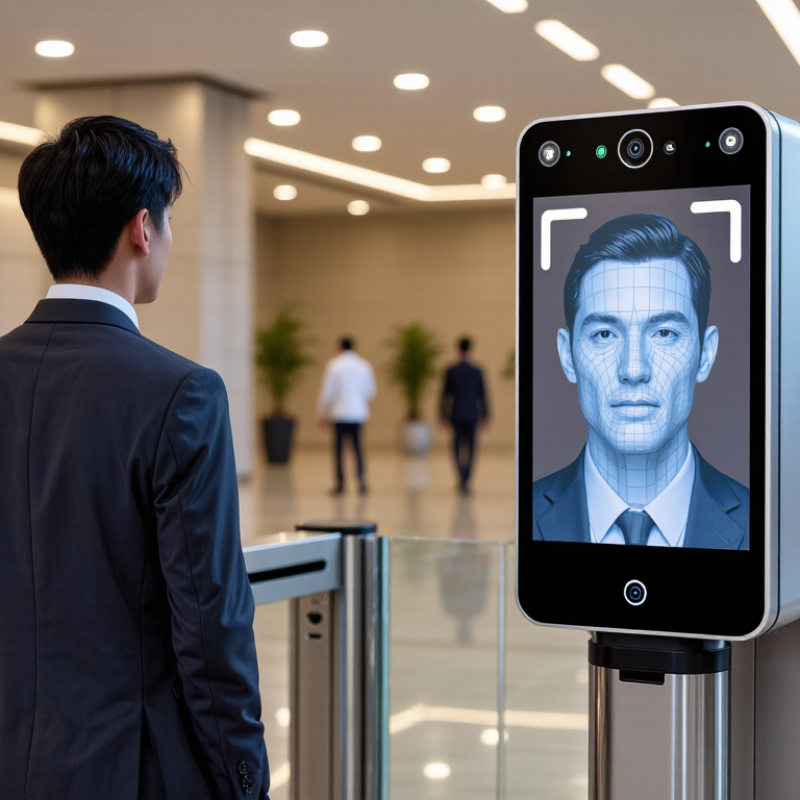
A face recognition device is an electronic system that identifies or verifies a person by analyzing facial features. It usually includes a camera, an image processor, and software for biometric comparison. The camera captures a face, even in a brief moment. It is not magic. The system measures patterns such as the distance between the eyes, nose shape, and jawline.

The device converts these features into a mathematical template. It then compares that template with stored, authorized records. Some systems also use liveness detection, which checks for natural movement or depth. This helps distinguish a real person from a printed image or screen display. In practical use, lighting matters greatly. Shadows, masks, camera angles, and changing hairstyles can affect performance.

A reliable setup needs more than fast matching. It requires clear user consent, secure data handling, regular maintenance, and carefully chosen accuracy thresholds. A false match can inconvenience the wrong person. A missed match can delay an authorized user. That weakness deserves attention. Face recognition is also less dependable when training data lacks demographic diversity. Operators should review results instead of treating every match as unquestionable. Device performance should be tested in the actual environment, including bright entrances, dim corridors, and busy periods. Privacy settings also need periodic review, because technical safety can change over time.

What Are the Main Components of a Face Recognition Device?

A face recognition device combines sensing hardware, image processing, and decision software. Its camera captures facial details, such as eye spacing, cheek contours, and jaw shape. Infrared sensors may improve performance in dim rooms. A small light can reveal depth, but harsh lighting still causes trouble.

The processing unit converts the image into a mathematical face template. It compares this template with stored templates or an approved identity record. NIST’s 2019 Face Recognition Vendor Test evaluated 189 algorithms from 99 developers. The results showed that accuracy and demographic performance varied widely between systems. Better hardware does not automatically produce fairer decisions.

The device also needs liveness detection. It checks for natural movement, depth, or changing light reflections. This helps distinguish a real person from a printed image or replayed video. ISO/IEC 30107-3 defines testing methods for presentation attack detection, giving engineers a common evaluation framework. Secure storage matters too. Encryption, access controls, and audit logs protect biometric templates.

Small details matter.

In practical testing, camera height can change the captured face angle. Wet glasses, masks, dust, and backlighting can reduce reliability. I have found that installation teams often focus on recognition speed and overlook maintenance. That is a weakness. A trustworthy device needs clear performance testing, documented limits, human review, and regular software updates.

How Does a Face Recognition Device Capture and Analyze a Face?

A face recognition device turns a visible face into measurable data. The process begins with a camera capturing light, shape, and contrast from the user’s face. Good lighting helps. A tilted head, harsh shadows, glasses, or motion can reduce image quality.

The device then detects key landmarks, such as the eyes, nose, mouth, and jawline. Software aligns these points and creates a mathematical representation called a face template or embedding. It does not store a simple photograph for comparison. Instead, it compares numerical patterns with an enrolled template. NIST’s Face Recognition Vendor Test reports show that image quality strongly affects recognition accuracy, especially when faces are small, blurred, or poorly illuminated.

Some systems also check for liveness. They may examine natural movement, depth, skin texture, or changes across several frames. This step helps separate a live person from a flat image or replayed video. It is not perfect, though. A real face can still confuse the device when the camera angle changes quickly.

The system calculates a similarity score and compares it with a chosen threshold. A higher threshold may reduce mistaken matches, but it can also reject legitimate users. NIST’s 2019 demographic-effects report found that false-positive rates varied substantially across demographic groups and algorithms. That finding deserves attention. A face recognition device is useful technology, but its results require testing, careful enrollment, and human review in sensitive situations.

How Does the Device Match Facial Data to an Identity?

A face recognition device turns a live image into measurable facial data. It maps features such as eye distance, cheek contours, and jaw shape. The result is a mathematical template, not a photograph. During enrollment, the system stores this template with an approved identity record. During use, a camera captures another image and creates a new template. The software then compares both templates through a similarity score. Small details matter. Glasses, shadows, camera angle, and facial movement can change the score.

The device usually works in two ways. In one-to-one verification, it asks, “Is this person who they claim to be?” In one-to-many identification, it searches a database for possible matches. A threshold controls the decision. A higher threshold may reduce false matches, but it can also reject legitimate users. The NIST Face Recognition Vendor Test reports show that demographic differences can affect false-positive rates, sometimes by factors exceeding 10 or 100 across algorithms. That finding requires careful testing, not blind confidence. NIST’s FRVT 1:1 Verification reports also stress image quality and threshold selection as practical factors. A score is not identity itself. It is evidence with uncertainty. Lighting still wins sometimes. Human review, audit logs, limited data retention, and regular accuracy testing can reduce avoidable errors, although none removes them completely.

Where Are Face Recognition Devices Used and What Are Their Limitations?

A face recognition device uses a camera and software to identify or verify a person. It detects facial features, creates a mathematical template, and compares that template with stored records. Some systems also check depth, movement, or eye patterns to reduce simple image-based mistakes. In a busy entrance, this process can take less than a second. It is fast.

These devices are used for building access, employee attendance, visitor registration, and patient identification. Schools, transport facilities, and financial offices may also use them under strict operational controls. In healthcare, accurate matching can prevent records from being assigned to the wrong person. However, convenience should not replace human judgment. A camera may support a decision, but it should rarely make a serious decision alone.

Limitations remain significant. Poor lighting, unusual camera angles, aging, facial coverings, and changes in appearance can reduce accuracy. False matches may delay an authorized person, while missed matches can weaken security. Performance can also vary across demographic groups if training data is unbalanced. That problem is measurable, but not always easy to notice. Privacy creates another concern. Organizations need clear notice, limited data retention, secure storage, and controlled access. Even with liveness detection, no system is perfect. A careful operator should review uncertain results, test the device in real conditions, and record failures instead of hiding them.

The uncomfortable part is simple: a confident-looking result can still be wrong.