Face verification technology has become a pivotal tool in enhancing security and user experience. Leading expert in the field, Dr. Emily Zhang, once stated, “Face verification is not just about technology; it’s about trust and usability.” Her insight reflects the profound implications of this technology across various industries, from banking to social media.
In a market rapidly evolving, understanding the essentials of face verification is vital. Companies often overlook the importance of accuracy and user privacy. The balance between security and convenience can be challenging. Implementing effective face verification involves intricate understanding and careful selection of algorithms. Accuracy should not come at the cost of user trust.
Furthermore, as the technology advances, ethical considerations must be addressed. Developers need to focus on creating systems that are fair and transparent. While face verification offers incredible benefits, it also requires a strategic approach. Continuous evaluation and adjustment are necessary for optimal performance. This complex landscape demands both expertise and a commitment to ethical practices in technology deployment.

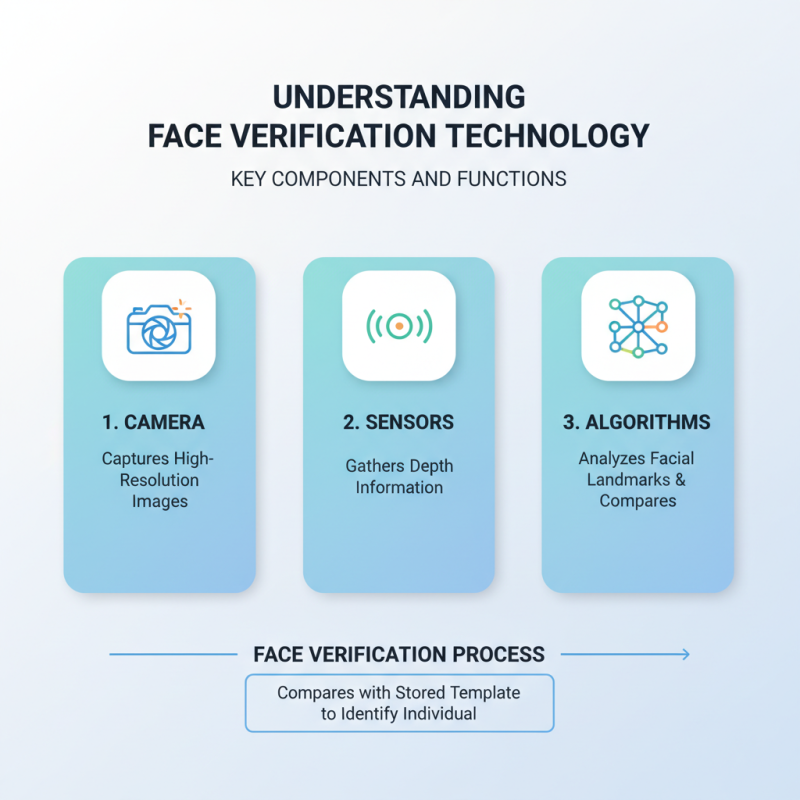
Face verification technology has evolved rapidly in recent years. This technology primarily identifies individuals by comparing their facial features with a stored template. The key components of this technology include cameras, sensors, and algorithms. Cameras capture high-resolution images, while sensors gather depth information. The algorithms analyze facial landmarks to make accurate comparisons.
The functionality of face verification technology relies heavily on its precision. It’s important to ensure that the algorithms used can adapt to different lighting conditions and angles. Challenges often arise when facial expressions change. Many systems struggle under varied environmental conditions. The accuracy of any face verification system directly affects its reliability in real-world applications.
For successful implementation, understanding these components and functions is crucial. Technological limitations can lead to false acceptances or rejections. Balancing security and user convenience is essential. Ethically, developers must prioritize user privacy. This remains a complex challenge within the field. A focus on transparency can build trust with users, ultimately enhancing the effectiveness of the technology.
The face verification market is evolving quickly. Recent statistics reveal significant growth, driven by heightened security needs. Companies increasingly rely on this technology to enhance user authentication processes. This trend is observed across sectors like finance, healthcare, and retail. Reports indicate that the face verification market is projected to reach substantial revenues by 2025. This is a clear sign of its rising importance.
However, as technology advances, challenges remain. Privacy concerns often arise when integrating face verification systems. Many users are wary of data misuse. Furthermore, accuracy is still a lingering issue. Some systems struggle with diverse demographics, leading to potential biases. This requires continuous refinement and testing. Companies must consider these factors while implementing solutions.
The demand for effective face verification primarily stems from its ability to provide quick and reliable access. As more businesses adopt this technology, the emphasis on transparency will become crucial. Users value knowing how their data is managed and protected. Balancing innovation with ethical considerations is paramount for long-term success in this field.
| Tip | Description | Current Market Trends | Projections for 2025 |
|---|---|---|---|
| Enhance Accuracy | Utilize advanced algorithms for improved performance. | Increased investment in AI technologies. | Accuracy rates to exceed 95%. |
| User Privacy | Implement data protection compliance measures. | Growing concern over data breaches. | Regulatory frameworks expected to tighten. |
| Diversity in Training Data | Focus on inclusive datasets for unbiased results. | Addressing bias in AI systems. | Increased emphasis on ethics in AI by 2025. |
| Integration with Other Technologies | Combine with biometric systems for enhanced security. | Rise of multimodal biometric solutions. | Market growth in biometric integration projected at 20% CAGR. |
| Edge Computing | Shift towards processing data closer to the source. | Adoption of edge AI increasing. | Market share of edge computing in AI expected to grow significantly. |
| Real-Time Processing | Enable immediate verification for user convenience. | Demand for faster verification solutions is increasing. | Forecast for real-time systems growth by 30% by 2025. |
| User Experience Focus | Streamline interfaces for ease of use. | Increased focus on UI/UX design. | User satisfaction rates projected to rise. |
| Global Acceptance | Facilitate cross-border transactions securely. | Growing trend in international security standards. | Widespread adoption across industries expected. |
| Cost Efficiency | Highlight the reduction of operational costs. | Emphasis on cost-effective solutions. | Investment in cost-reducing technologies growing. |
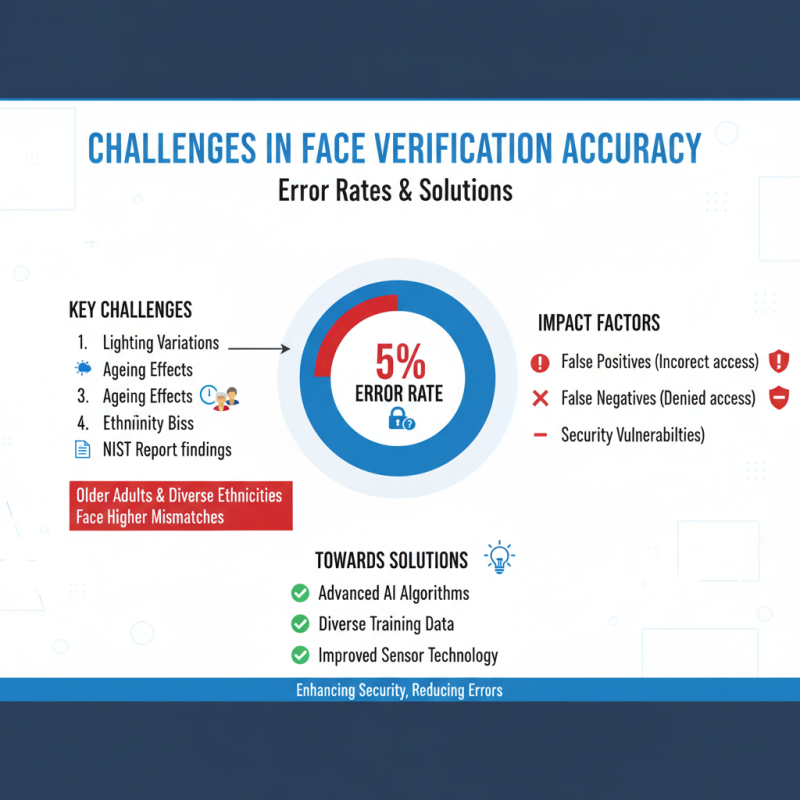
Face verification technology plays a crucial role in enhancing security. However, achieving high accuracy remains a challenge. Error rates in face verification systems can reach as high as 5% under certain conditions, according to a report by the National Institute of Standards and Technology (NIST). Factors such as lighting, age, and ethnicity can influence accuracy significantly. For instance, older adults and individuals from diverse ethnic backgrounds often face a higher rate of mismatches.
To address these challenges, implementing robust data training methods is essential. This includes using datasets that reflect varied conditions and demographics. When training algorithms, aim for diversity in age, race, and environmental settings. Testing regularly against a comprehensive testing set helps identify gaps in the system’s performance.
Additionally, employing adaptive learning can improve recognition rates. Systems need to learn from false rejections and acceptances. Regular updates based on real-world data can enhance accuracy. Effective system calibration ensures that performance remains consistent across different scenarios. By focusing on these strategies, organizations can improve the effectiveness of their face verification technology while addressing inherent challenges.
Implementing face verification in security systems requires careful consideration. Understanding the specific environment is crucial. Each location presents unique challenges. For instance, lighting variations can affect accuracy. Shadows or glare might distort facial features. Therefore, adjusting the technology to minimize these issues is vital.
Another important aspect is data management. Secure storage of biometric data is essential. Encryption should be a priority to protect user information. Moreover, regular audits help ensure compliance with privacy regulations. However, some organizations overlook these measures, leading to vulnerabilities.
Lastly, user experience must not be neglected. A smooth onboarding process enhances user acceptance. Complicated systems can alienate users. Testing the technology with diverse demographics can reveal potential biases. This is an area where many systems still fall short. Addressing these issues will create a more effective face verification system.
The future of face verification technology is shaping up to be transformative. Innovations in artificial intelligence are driving significant advancements. As algorithms become more sophisticated, systems will enhance their ability to recognize faces accurately under various conditions. Better performance in low-light areas and crowded environments will be crucial.
Next, privacy concerns are becoming more prominent. Users demand transparency about how their data is used. Addressing these concerns will require robust security measures. Experts predict a rise in decentralized systems to give individuals more control over their information. However, the balance between convenience and privacy is still a challenge.
Moreover, ethical considerations are critical. Bias in facial recognition systems can lead to significant issues. Developers must ensure their datasets are diverse to improve fairness. As we move forward, the dialogue around the ethical implications of these technologies will become increasingly important. Transparency and accountability are essential for building user trust in face verification systems.