How to Choose the Best Medical Air Purifier for Your Home?
Choosing the best medical air purifier for your home can be a daunting task. With countless options on the market, it's essential to understand what makes a good purifier. A medical air purifier is designed to remove harmful particles from the air. This includes allergens, dust, and even viruses. These devices can significantly improve indoor air quality. However, not all purifiers are created equal.
When selecting a medical air purifier, consider its filtration system. HEPA filters are often recommended for their ability to trap tiny particles. Look for a unit that operates quietly. No one wants a loud machine disrupting their peace. Think about the size of the room where you will use it. Some purifiers are better suited for larger spaces.
Reflect on your specific needs. Do you have allergies or respiratory issues? These factors will influence your choice. Evaluate your options carefully. A good purifier can enhance your health and well-being. But make sure it fits your lifestyle and budget.
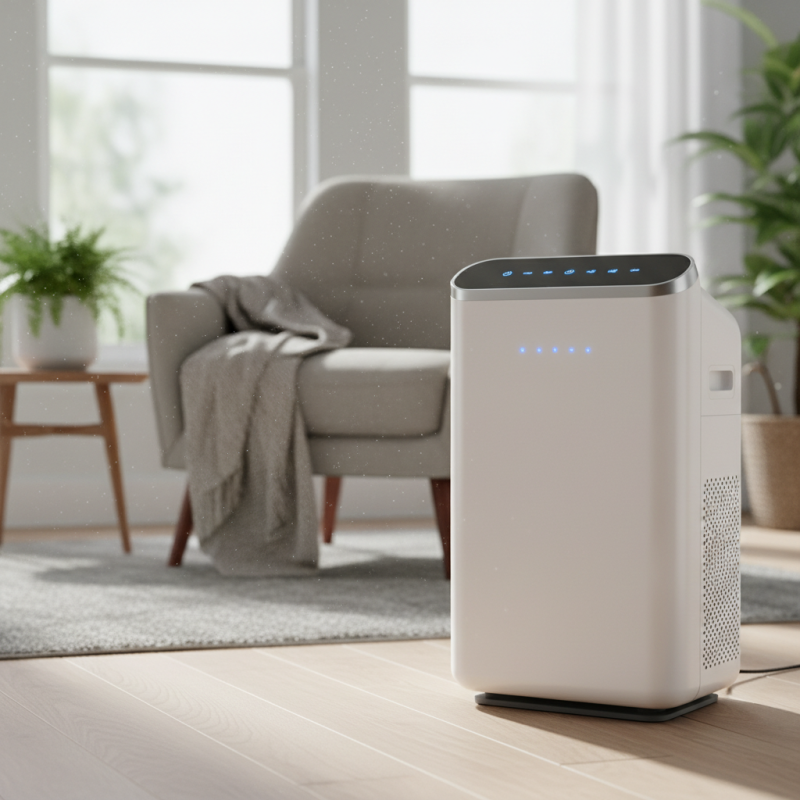
Understanding the Importance of Air Purifiers in a Medical Setting
Air purifiers play a crucial role in maintaining a clean environment in medical settings. Hospitals and clinics often face challenges with airborne contaminants. These include bacteria, viruses, dust, and allergens. A well-functioning air purifier can significantly reduce these risks. By filtering out harmful particles, it helps maintain a healthier atmosphere for both patients and healthcare workers.
In homes, understanding the importance of air purifiers is essential. Many people overlook indoor air quality. Polluted air can lead to health issues over time. Air purifiers are designed to combat these problems. They can trap tiny particles that standard ventilation may miss. Large rooms and multi-story homes often require multiple devices for effective coverage.
Choosing the right unit is not always straightforward. Consider factors like filter type, room size, and noise levels. Some models may not be effective for larger spaces. It’s important to read reviews and assess efficiency. Not every purifier is the same; some might fail to meet expectations. It’s a learning process, and understanding your specific needs is vital.
Key Features to Consider When Selecting a Medical Air Purifier
When selecting a medical air purifier, it's essential to focus on its core features. Look for HEPA filters. These filters capture 99.97% of airborne particles. They play a critical role in improving indoor air quality. Additionally, consider the activated carbon filter. This feature helps eliminate odors and toxins. Effective air purifiers balance filtration and air circulation.
Noise levels matter, too. Some air purifiers operate quietly, while others can be disruptive. A noisy unit can disturb sleep or concentration. Users should also reflect on the purifier's size. The unit must fit the room dimensions for optimal efficiency. An undersized unit won't clean the air adequately.
Another aspect is the ease of maintenance. Filters need replacing regularly. Choose a model that makes this process simple. Some purifiers even signal when maintenance is due. Think about the energy consumption as well. An energy-efficient unit saves money in the long run. Finally, consider the cost, but remember: cheaper isn't always better. Quality often comes with a higher price tag.
Comparison of Key Features in Medical Air Purifiers
Types of Medical Air Purifiers: HEPA, Carbon, and Ionizers Explained
When selecting a medical air purifier for your home, understanding the types available is crucial. HEPA filters are popular for their efficiency. They capture particles as small as 0.3 microns, which includes dust, pollen, and even some bacteria. This makes HEPA purifiers a solid choice for allergy sufferers. Keep in mind, however, they may not address odors or gases effectively.
Carbon filters play a different role. They are designed to absorb chemicals and odors. If you live in a city or near busy roads, a carbon purifier may help reduce unpleasant smells and harmful fumes. Yet, carbon filters require regular replacement to maintain their effectiveness. Over time, they can become saturated and less efficient.
Ionizers are another option. They work by charging particles in the air, causing them to fall to surfaces. While they can lower airborne particles, they may produce ozone, which can be harmful. Be cautious with this type.
Tips for choosing the right purifier include checking room size compatibility and filter change indicators. It’s also wise to look for models that combine technologies. Not all air purifiers are equal, and your needs may vary. Don't hesitate to ask for advice.
How to Choose the Best Medical Air Purifier for Your Home? - Types of Medical Air Purifiers: HEPA, Carbon, and Ionizers Explained
| Type | Filtration Mechanism | Pros | Cons | Best For |
| HEPA | Mechanical filtration that traps particles. | High efficiency, captures small particles. | Limited to particulate matter; needs replacement filters. | Allergy sufferers, asthma patients. |
| Carbon | Adsorption of gas and odor molecules. | Effective for odors and VOCs. | Does not remove particulate matter. | Odor control, chemical sensitivity. |
| Ionizers | Produces charged ions that attach to particles. | Reduces particles in the air, often quietly. | May produce ozone, can sometimes be less efficient. | General air cleaning, low-noise environments. |
Evaluating Room Size and Air Flow Rates for Optimal Purification
When selecting a medical air purifier, room size and airflow rates are crucial. A small unit in a large space may struggle to clean the air effectively. Measure your room dimensions first. For example, a 200-square-foot room needs a purifier that can handle at least 200 square feet efficiently. Knowing this ensures adequate purification.
Next, consider airflow rates. This is often indicated in cubic feet per minute (CFM). A higher CFM means better air circulation and quicker purification. For a living room, aim for a CFM that can circulate the entire room's air several times per hour. A lower CFM might leave corners untouched, making some areas more polluted.
You might find that some purifiers are not as powerful as advertised. Reading actual user reviews can reveal their effectiveness in real settings. Pay attention to noise levels too. A powerful purifier might disrupt your daily life if it’s too loud. Balancing efficiency and comfort is key to making the right choice.
Assessing Cost Efficiency and Maintenance Needs of Air Purifiers
When it comes to selecting a medical air purifier, cost efficiency is crucial. Consider energy consumption. Some models use more electricity than others. This affects monthly bills. Look for models with energy-saving features. They might save you money in the long run.
Maintenance needs are also a key factor. Regular filter changes are necessary. Some filters are washable, while others require replacements. Understand the frequency and cost of these replacements. Keeping track can be overwhelming. It may lead to neglect, which reduces the purifier's effectiveness.
Tips: Choose a model with easy-to-access filters. This encourages timely maintenance. Check if automatic alerts are available. Such features help you remember when to change filters. Make sure to read the manual carefully. This saves you from costly mistakes. Keep your home’s air clean and healthy by making informed choices.