How to Choose the Best Loading Robots for Warehouses?
Choosing the Best Loading Robots for Warehouses requires more than comparing payload ratings or impressive videos. Loading Robots now support pallet movement, truck loading, carton handling, and repetitive dock work. The International Federation of Robotics reported 541,302 industrial robots installed worldwide in 2023. That figure shows strong automation momentum. However, warehouse loading has different demands. Tight dock spaces, uneven floors, changing pallet sizes, and short delivery windows can quickly expose weak equipment choices.
Industry evidence supports careful evaluation. MHI’s 2024 Annual Industry Report, based on more than 1,700 supply chain professionals, identifies robotics and automation as major investment priorities. DHL’s Logistics Trend Radar also highlights advanced robotics and artificial intelligence as important logistics trends. These reports show direction, not a guaranteed return. A robot may lift 1,000 kilograms, yet still perform poorly beside a narrow dock door. The real test includes cycle time, reach, gripper stability, safety sensors, software integration, maintenance access, and operator training.
Measure the workflow first. Watch the loading bay during peak hours. Record pallet dimensions, truck heights, handling errors, and waiting time. Then compare vendors using transparent data, practical demonstrations, and total cost estimates. The cheapest machine may create expensive integration problems. The most advanced model may be unnecessary. No system fits every warehouse. A useful decision often depends on details that product brochures overlook. This guide examines those details, helping decision-makers choose Loading Robots with stronger evidence, realistic expectations, and room for improvement.
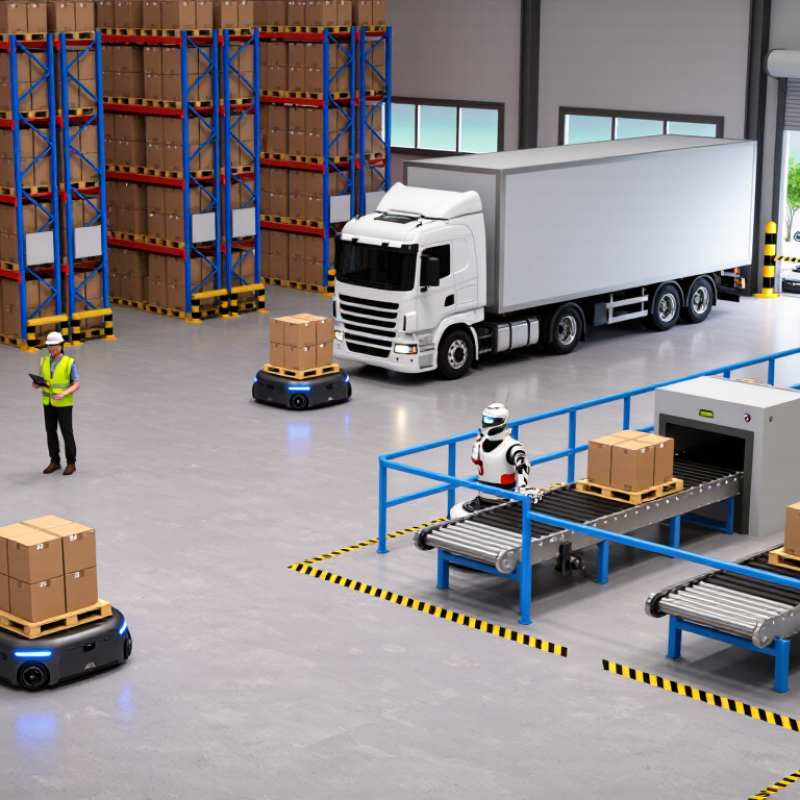
Define the Workload: 500–1,000 Cases/Hour, Payload, Reach, and Dock Time
Choosing the best loading robot starts with a clear workload definition. A target of 500–1,000 cases per hour sounds precise, but it can hide major variations. Measure peak demand, average demand, and the busiest loading wave. Record case dimensions, weight, packaging strength, and pallet patterns. Payload includes the gripper and any attachment, not only the carton. Allow extra capacity for irregular cases.
Reach matters at the dock. A robot may handle the first rows easily but struggle near the trailer wall. Measure the full loading depth, door height, aisle width, and transfer distance. Dock time should include approach, gripping, placement, release, and recovery. Add time for scanner checks and occasional manual intervention. A fast arm is not useful if trucks wait during changeovers.
Tips: Test with real cartons, including soft, heavy, and awkward cases. Run a timed pilot during the busiest shift. Check noise, floor space, operator visibility, and maintenance access. Ask staff where jams usually occur. Their experience often reveals details that a spreadsheet misses.
Be careful with optimistic capacity claims. Throughput can fall when case sizes change or inbound flow becomes uneven. I would specify a stable operating range, such as 700 cases per hour, rather than promise the maximum. Also examine reach at maximum payload, emergency stops, fault recovery, and cleaning routines. These practical details shape daily reliability more than impressive demonstration speeds.
How to Choose the Best Loading Robots for Warehouses?
Compare representative warehouse requirements across three operating levels. A suitable loading robot should match the target throughput of 500–1,000 cases per hour while supporting the required payload, reach, and dock cycle time.
Audit Safety Compliance: ISO 10218, ISO 3691-4, Guards, and Risk Controls
When selecting loading robots, safety evidence should outrank cycle speed. Ask for conformity records, technical files, and documented risk assessments. ISO 10218 provides a key framework for industrial robot design, integration, and safeguarding. Check whether the assessment covers the complete loading system, not only the robot arm. A certificate without clear scope is weak evidence.
ISO 3691-4 matters when mobile robots move pallets or loads through shared warehouse areas. Review route separation, obstacle detection, emergency stops, speed limits, and safe behavior near dock doors. Guards should prevent access to crushing and trapping points. Interlocked gates must stop motion when opened. Presence sensors need realistic testing, including blocked views and reflective surfaces.
Inspect the real workplace. Watch trailer movement, dock plates, pallet instability, floor damage, and pedestrian shortcuts. A clean layout drawing can hide daily risks. The risk controls should follow a clear order: remove the hazard, separate people, then add protective devices and procedures. Training remains important, but it cannot repair poor guarding. A checklist can miss uncomfortable details. It happens. Ask operators where the robot surprises them, and record those answers. Recheck safety functions after software updates, layout changes, or new pallet types. Keep test results, maintenance records, and corrective actions available for independent review. Select equipment only after these controls work under normal and abnormal loading conditions.
Validate Integration: WMS/WES APIs, Barcode Accuracy, OEE, and Uptime
How to Choose the Best Loading Robots for Warehouses?
A loading robot should fit your digital workflow, not operate as an isolated machine. During a pilot, connect it to the WMS and WES test environments. Check order release, task confirmation, fault codes, and inventory updates. The API should show clear timestamps and useful error messages. Test normal orders, cancelled tasks, and sudden network delays. Test the handshake.
Barcode accuracy deserves physical testing. Use clean labels, wrinkled labels, angled cartons, and mixed package sizes. Measure successful scans at the robot’s real operating speed. A scanner that performs well in a quiet demonstration may struggle beside moving conveyors. Keep rejected cartons visible, with reasons recorded for each failure.
OEE should include availability, performance, and quality, not just completed loads. Compare planned cycle time with actual loading time across several shifts. Track pauses caused by sensors, software, operators, and replenishment delays. Uptime claims need evidence from maintenance logs, restart tests, and overnight operation. We once treated short pilot runs as reliable proof, and that judgment was too optimistic. A longer test exposed small communication delays that gradually created missed tasks. Plan recovery drills, including power restoration, blocked lanes, and temporary API loss. Skilled technicians should review the data before deployment.
Select by TCO: Labor Hours, Energy, Maintenance, and 3–5-Year Payback
Choosing loading robots starts with total cost of ownership, not purchase price. In warehouse trials, teams often measure cartons per hour but overlook paid waiting time. Record loading labor hours across normal shifts, overtime, breaks, and seasonal peaks. A robot removing two manual positions may still disappoint if workers spend hours feeding, clearing jams, or supervising. Use actual dock data from at least four representative weeks. Small details matter. A ten-minute delay repeated twenty times daily becomes expensive.
Energy and maintenance deserve equal scrutiny. Measure electricity per loaded pallet, including idle periods and charging losses. Ask for service intervals, spare-part prices, technician response times, and expected component life. Keep a conservative reserve for sensors, belts, grippers, and software support. Perfect forecasts are rare. I have seen optimistic models fail because cleaning labor was excluded. Compare annual operating costs with the current process, then calculate payback over three to five years. Include training, integration, floor changes, and downtime. If benefits depend on peak volume, test a low-volume scenario too.
Tips: Build a simple monthly TCO sheet. List labor, energy, maintenance, training, downtime, and financing separately. Request evidence from similar loading conditions, not showroom demonstrations. Set a target payback, then challenge it with 15% lower throughput and 20% higher maintenance costs. If the project still works, the decision is stronger.
How to Choose the Best Loading Robots for Warehouses? - Select by TCO: Labor Hours, Energy, Maintenance, and 3–5-Year Payback
| Loading Solution | Typical Throughput
(Units/Hour) | Annual Labor Hours | Annual Energy Use
(kWh) | Annual Energy Cost
(USD) | Annual Maintenance
(USD) | Initial Investment
(USD) | 3-Year TCO
(USD) | 5-Year TCO
(USD) | Estimated Payback |
| Manual Loading | 300–450 | 9,600 | 0 | $0 | $0 | $0 | $691,200 | $1,152,000 | Baseline |
| Robot-Assisted Loading System | 450–650 | 4,800 | 5,760 | $691 | $11,200 | $140,000 | $498,673 | $775,455 | 1.4 years |
| Autonomous Loading Robot | 600–900 | 3,600 | 9,600 | $1,152 | $17,600 | $220,000 | $385,262 | $528,770 | 1.6 years |
| High-Throughput Robotic Loading Cell | 800–1,200 | 2,400 | 12,000 | $1,440 | $22,400 | $280,000 | $402,507 | $687,200 | 1.9 years |
Planning assumptions: The comparison assumes two loading positions, two shifts per day, 300 operating days per year, an average fully burdened labor cost of $24 per hour, an electricity rate of $0.12 per kWh, and no financing cost or tax incentives. Annual maintenance is estimated at approximately 8% of the initial robotic-system investment.
How to interpret the results: TCO includes initial investment, direct loading labor, energy, and planned maintenance. It excludes building modifications, integration, software subscriptions, consumables, downtime, product damage, and residual value. Actual throughput and payback should be validated using site-specific carton dimensions, trailer layouts, operating hours, utilization, safety requirements, and labor rates.