How to Choose Fertilizer Granulation Equipment in 2026?
Choosing Fertilizer Granulation equipment in 2026 is not simply a matter of buying the largest machine. The right system must match your materials, production target, product shape, and site conditions. A damp, fine powder behaves differently from a coarse blend, even when both are intended for the same fertilizer grade. That difference matters. It can affect granule strength, dust levels, drying needs, and the consistency of each batch.
Start with real process data, not brochure capacity alone. Ask suppliers how the equipment handles your actual feedstock, including changes in moisture and particle size. Review expected throughput alongside power use, water demand, wear parts, cleaning access, and operator training. A small drum sample or pilot trial can reveal problems that a specification sheet cannot. Not every line needs the same design. A disc granulator may suit one operation, while a drum or other process may better fit another. The choice depends on the full production route, including mixing, drying, screening, and recycling oversize material.
Fertilizer Granulation equipment should also be judged by the quality of support behind it. Request clear performance assumptions, reference installations, maintenance schedules, and a written scope for commissioning. Check whether spare parts are accessible and whether technicians can respond within a practical timeframe. Be cautious when a quote promises high output without explaining the feed conditions behind that figure. Even careful planning cannot remove every uncertainty; raw materials change, and early operating results may challenge initial estimates. Build room for testing and adjustment. A dependable selection balances product quality, operating cost, serviceability, and realistic production goals.
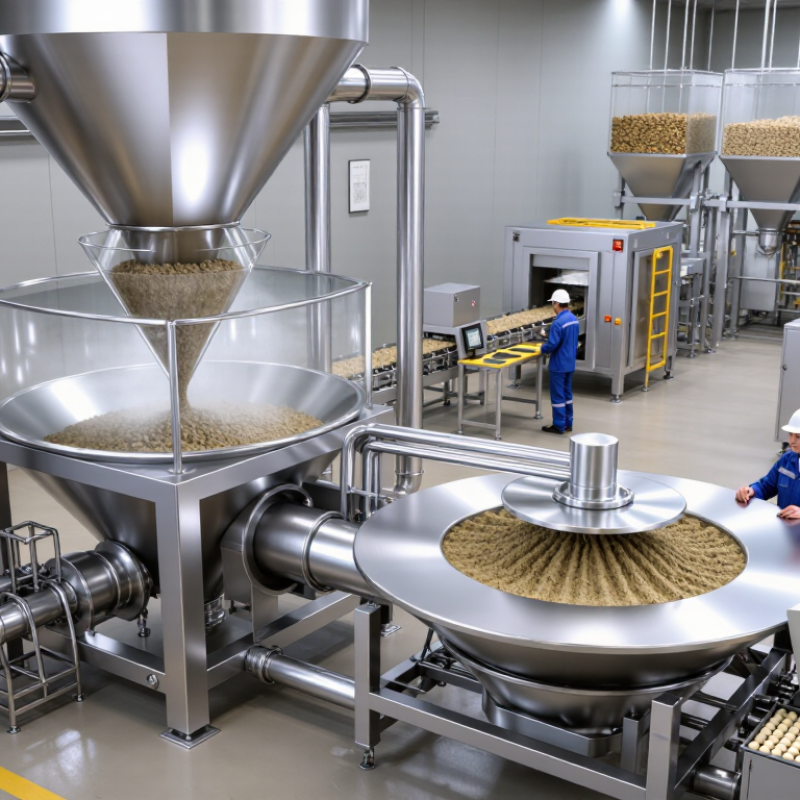
Define Fertilizer Type, Production Goals, and Material Properties
How to Choose Fertilizer Granulation Equipment in 2026?
Define Fertilizer Type, Production Goals, and Material Properties
Choosing fertilizer granulation equipment starts with the product, not the machine. Urea, ammonium sulfate, NPK blends, and organic-based fertilizers behave differently during mixing and granulation. Define the target nutrient formula, granule size, and output rate before comparing equipment. The International Fertilizer Association’s 2024 Medium-Term Fertilizer Outlook estimated global fertilizer use at about 205 million tonnes of nutrients in 2024/25. That scale makes product consistency and reliable throughput practical priorities, not just specification-sheet details.
Then test the actual feed materials. Record moisture, particle-size distribution, bulk density, flowability, and abrasiveness; note whether the material cakes or absorbs moisture during storage. These properties influence feed control, binder choice, granulator type, and drying demand. A sample taken on a dry morning may behave differently after humid storage. A clean sample is not the whole story. Small variations matter.
Set production goals in measurable terms: tonnes per hour, acceptable fines and oversize, recycle load, energy use, and changeover frequency. A plant making several formulas may value flexible settings more than maximum output on one product. Ask suppliers to test representative materials under realistic operating conditions, and compare the resulting granule strength and size distribution. I would still treat a short trial cautiously; it may not capture seasonal moisture swings or extended wear. Keep those uncertainties visible when choosing equipment.
How to Choose Fertilizer Granulation Equipment in 2026? — Define Fertilizer Type, Production Goals, and Material Properties
| Fertilizer Type | Typical Material Properties | Common Granulation Route | Suitable Equipment | Production Goal to Define | Key Selection Considerations |
|---|---|---|---|---|---|
| NPK compound fertilizer | Mixed nutrient salts and fillers; formulation, solubility, and moisture sensitivity vary with the recipe. | Wet granulation using a liquid binder or steam, followed by drying, screening, and cooling. | Rotary drum granulator or pan/disc granulator. | Required output rate, product size range, nutrient uniformity, and allowable recycle load. | A rotary drum suits continuous, larger-scale production; a pan offers visual control of the granulation bed. Check corrosion resistance and compatibility with the formulation. |
| Urea | Highly water-soluble; absorbs moisture and can cake. Heat and moisture exposure require careful process control. | Melt granulation or prilling, depending on the desired product form and plant process. | Fluidized-bed granulator for melt granules, or a prilling tower when prills are acceptable. | Granule versus prill specification, throughput, particle-size distribution, and product handling requirements. | Choose equipment for the intended product form. Control melt temperature, cooling, and moisture exposure to limit agglomeration and caking. |
| Ammonium sulfate | Crystalline, water-soluble salt; particle behavior depends on crystal size, feed condition, and moisture. | Compaction or crystallization-based processing; wet granulation may be used when a binder and formulation are appropriate. | Roller compactor for dry agglomeration, or a crystallization system for crystal-product routes. | Target particle size, bulk density, dissolution behavior, and whether a dry or wet process is preferred. | Roller compaction avoids adding process water but requires suitable feed preparation and control of fines. Verify that the selected route meets the required product specification. |
| Potassium chloride (MOP) | Hard, crystalline, water-soluble material; feed size and moisture influence compaction and granule strength. | Dry compaction followed by crushing and screening, or wet granulation for suitable blends. | Roller compactor with a crusher and screening loop; rotary drum for compatible wet-granulation blends. | Granule strength, size consistency, fines generation, and compatibility with blending or bulk handling. | Assess feed particle-size distribution and compaction behavior. Consider wear-resistant surfaces where abrasive feed or high wear is expected. |
| Organic compost or manure-based fertilizer | Variable fiber content, bulk density, and moisture; organic feedstocks may be compressible and prone to irregular flow. | Wet agglomeration or extrusion, with drying when required by the final product specification. | Pan/disc granulator, rotary drum granulator, or extrusion granulator. | Desired granule shape, throughput, feed variability, and final moisture and storage stability. | Test the actual feedstock before equipment selection. Fiber length, moisture, binder choice, and screening strategy strongly affect operation and granule quality. |
| Single superphosphate (SSP) or similar phosphate fertilizer | Mineral-based material; acidity, moisture, fines content, and chemical composition depend on the process and formulation. | Wet granulation with controlled liquid addition, followed by curing or drying as required by the process. | Rotary drum granulator or pan/disc granulator. | Capacity, granule-size distribution, process residence time, and downstream curing or drying needs. | Review material corrosiveness and process chemistry when specifying wetted parts. Confirm that the equipment layout accommodates the required conditioning and finishing steps. |
Selection note: These are general process-guidance examples, not fixed equipment specifications. Confirm feed analysis, moisture, particle-size distribution, target granule properties, and required capacity through material testing and process design before final equipment selection.