Skip To Content

What Are the Best Fashion Raincoat Manufacturers in China?

Finding the best Fashion Raincoat manufacturers in China takes more than comparing prices or browsing polished product photos. A dependable partner should show how its coats perform in real conditions: rain beading on the fabric, sealed seams holding through movement, and zippers staying smooth after repeated use. Small details matter.

British designer Christopher Raeburn, known for technical outerwear, uses the design mantra “Remade, reduced, recycled.” It offers buyers a useful lens: ask what a coat is made from, how it is constructed, and whether its design avoids unnecessary waste. That phrase is a design principle, not proof that any particular supplier meets a performance or sustainability standard. Verify claims with product documents and samples.

This guide examines manufacturers through practical sourcing questions: fabric options, waterproof construction, breathability, customization, minimum order quantities, sample quality, and production communication. It also considers quality-control procedures and the evidence suppliers provide for material or performance claims. A factory may look impressive online yet deliver a sample with uneven stitching or a stiff lining. Samples can disappoint. That matters.

No single manufacturer is best for every buyer. A startup may prioritize flexible orders, while an established label may need consistent sizing across larger runs. The comparisons ahead are a starting point, not a substitute for testing samples, checking specifications, and confirming expectations directly with each supplier. Even careful research has limits. The right choice depends on the coat you want to make and the proof the manufacturer can provide.
What Are the Best Fashion Raincoat Manufacturers in China?

What Makes a Fashion Raincoat Manufacturer in China?

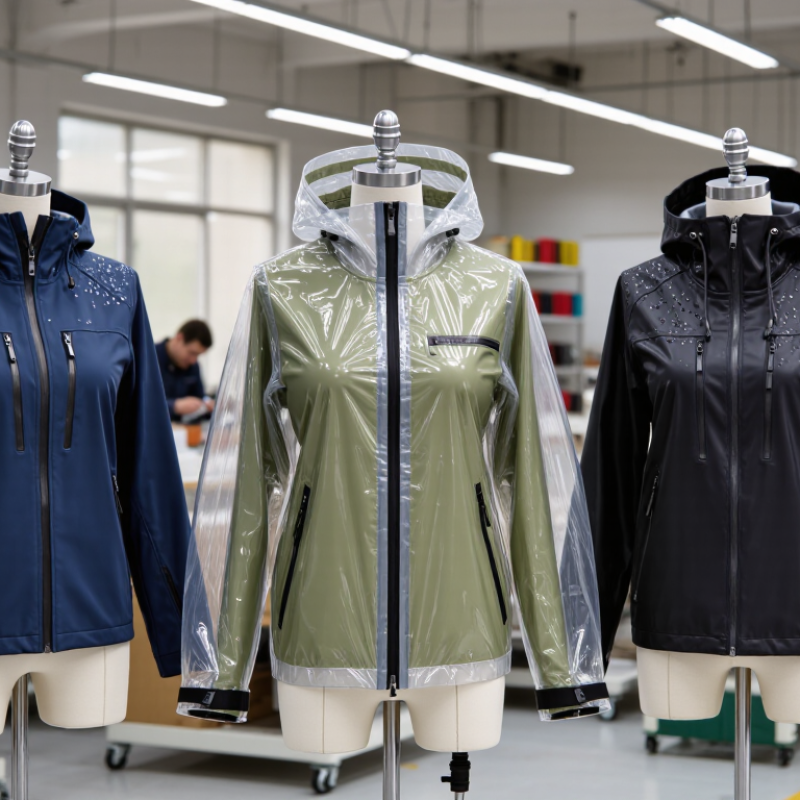
A capable fashion raincoat manufacturer in China should balance weather protection with a silhouette people want to wear. Ask about fabric weight, coating, lining, and seam construction. These choices affect how a coat feels, how it drapes, and whether water can seep through stitched areas. A useful sample review includes checking the hood in wind, testing pocket access, and wearing the coat over a sweater.

Look for a workshop that can explain its process clearly, from pattern development to final inspection. Request a pre-production sample and compare measurements, zipper function, stitching, and color under natural light. Ask how the factory checks water resistance and handles defects. Specific records are more reassuring than broad promises. Small details matter.

Communication is part of quality. A reliable team should flag material limits, confirm revisions in writing, and give realistic production timelines. Check whether its capacity matches your order size, and ask how it manages fabric consistency between batches. A polished sample can still hide problems in bulk production. I would not treat one successful test as proof of lasting performance; repeated checks are wiser, even if they take extra time.

How China’s Fashion Raincoat Manufacturing Industry Works

What Are the Best Fashion Raincoat Manufacturers in China?

How China’s Fashion Raincoat Manufacturing Industry Works

China’s fashion raincoat industry links fabric mills, garment factories, trim suppliers, and inspection teams. Many manufacturers source polyester or nylon shells, then add water-resistant coatings, linings, zippers, and adjustable hoods. The China National Textile and Apparel Council reported textile and apparel exports of US$293.6 billion in 2023, down 8.1% year on year. This figure covers the wider sector, not raincoats alone. It shows the scale of the supply network, but not the quality of any individual factory.

Production usually begins with a tech pack and a sample. Technicians check seam placement, pocket access, and fabric feel before bulk cutting. During sewing, seam-taping teams seal vulnerable joins, especially around shoulders and hood edges. Inspectors may test water resistance and examine stitching, measurements, and zippers. Ask which test method and performance threshold a supplier uses; “waterproof” alone is too vague. I have seen specifications look complete on paper, yet leave room for interpretation.

Tips: Request a pre-production sample and a written inspection checklist. Confirm fabric composition, coating, seam construction, and test results in the same document. Keep one approved sample for comparison. A clear checklist helps, though it cannot replace a factory visit.

Which Types of Raincoats Do Chinese Manufacturers Produce?

Chinese raincoat manufacturers produce more than lightweight ponchos. Their ranges commonly include packable shells, long trench-style coats, cycling jackets, children’s rainwear, and workwear with reinforced seams. Buyers can also request hooded parkas, zip-front capes, or roomy coats designed to fit over backpacks. Small details matter: a storm flap over the zipper, adjustable cuffs, and a brimmed hood help keep rain from running inside.

Materials vary by purpose. PVC and PEVA are often used for low-cost, wipe-clean ponchos; polyester and nylon shells are common for reusable outdoor styles. Textile Exchange’s Materials Market Report 2024 estimates that polyester represented 57% of global fiber production in 2023, reflecting its broad availability—not proof that every polyester coat performs alike. Some factories offer PU or other coatings, mesh linings, taped seams, and recycled-fiber options. Ask for fabric weight, coating details, seam construction, and a sample tested in realistic rain. “Waterproof” is not one fixed standard. A thin shell may handle a brief shower, yet feel clammy during a long walk.

Which Types of Raincoats Do Chinese Manufacturers Produce?

A category map of common raincoat product families. Each bar represents one category; this is not market-share or production-volume data.

Common offerings include coated-fabric raincoats, lightweight packable styles, ponchos, trench-style coats, and high-visibility workwear. Available materials and specifications vary by manufacturer.

How to Evaluate China’s Leading Fashion Raincoat Manufacturers

Evaluating China’s leading fashion raincoat manufacturers takes more than comparing catalog photos. Request a sample in the exact fabric, lining, and color planned for production. Check the hood adjustment, zipper guard, seams, and pocket openings after a controlled water-spray test. Details matter. A polished sample may differ from bulk production, so ask how approved samples are documented and matched.

Review each factory’s experience with your coat style, order volume, and seasonal schedule. Request written fabric specifications, inspection checkpoints, defect-handling procedures, minimum order quantities, and realistic lead times. Recent production references or a factory visit can provide useful context. Ask for proof. A reliable supplier should explain limitations as clearly as strengths. Vague answers about coating durability or color consistency deserve follow-up. One test alone cannot prove long-term performance.

Tips: Send a clear tech pack with measurements, stitch details, and target tolerances. Ask the manufacturer to test samples after washing and repeated wear, not just straight from the sewing line. Keep written records of agreed changes; small misunderstandings can become costly later.

What to Check Before Choosing a Raincoat Manufacturing Partner

Before choosing a raincoat manufacturer, inspect how it controls fabric, seams, and production batches. Ask for the fabric specification, coating type, and supplier traceability records. Textile Exchange’s 2024 Materials Market Report estimates global fiber production reached 124 million tonnes in 2023. That scale makes material traceability worth checking. Small details matter. Confirm that any recycled-content claim is supported by documents tied to the actual fabric, not just a sales sheet.

Water resistance needs measurable evidence. Request reports showing the test method, results, date, and fabric tested. ISO 811 measures resistance to water penetration under hydrostatic pressure; a spray test alone does not establish seam waterproofness. Ask how taped seams, zipper covers, and hood openings are checked. A test on plain fabric may not represent a finished coat. Samples can mislead.

Check the partner’s production controls before placing a large order. Review a pre-production sample, then compare it with random pieces from a pilot run. Ask how defects are recorded, who approves repairs, and whether production capacity matches your delivery schedule. Visit the facility if practical, or request a recent independent audit and clear photos of workstations. One imperfect point: even a tidy audit can miss a rushed production line, so agree on written inspection criteria and keep approved samples for comparison.