Skip To Content

7 Best Circuit Switches for Global Buyers?

Choosing a Circuit Switch is a practical decision with consequences for uptime, safety, and maintenance. The International Energy Agency’s Electricity Grids and Secure Energy Transitions report estimates that 80 million kilometres of grids must be added or refurbished by 2040. That is roughly the length of today’s entire global grid. More equipment will need to operate reliably in substations, factories, commercial buildings, and renewable-energy projects.

The IEA’s Electricity 2024 report also projected average global electricity-demand growth of about 3.4% annually from 2024 to 2026. Growth varies by region, but buyers everywhere need specifications that match real operating conditions. A switch suited to a dry indoor panel may be a poor fit for a dusty site or coastal installation. Details matter: rated voltage, current, pole configuration, insulation, switching duty, enclosure rating, and access to replacement parts. Under IEC 60947-3, low-voltage switches and switch-disconnectors are covered by a defined product standard; higher-voltage equipment requires different assessment.

This guide compares seven Circuit Switch options for global buyers, focusing on application fit, documented ratings, standards, and support availability. It is not a universal ranking. A low purchase price can look attractive, until installation or maintenance changes the calculation. Still, a shortlist can mislead. Confirm the latest datasheet, applicable local requirements, and the manufacturer’s evidence before ordering.
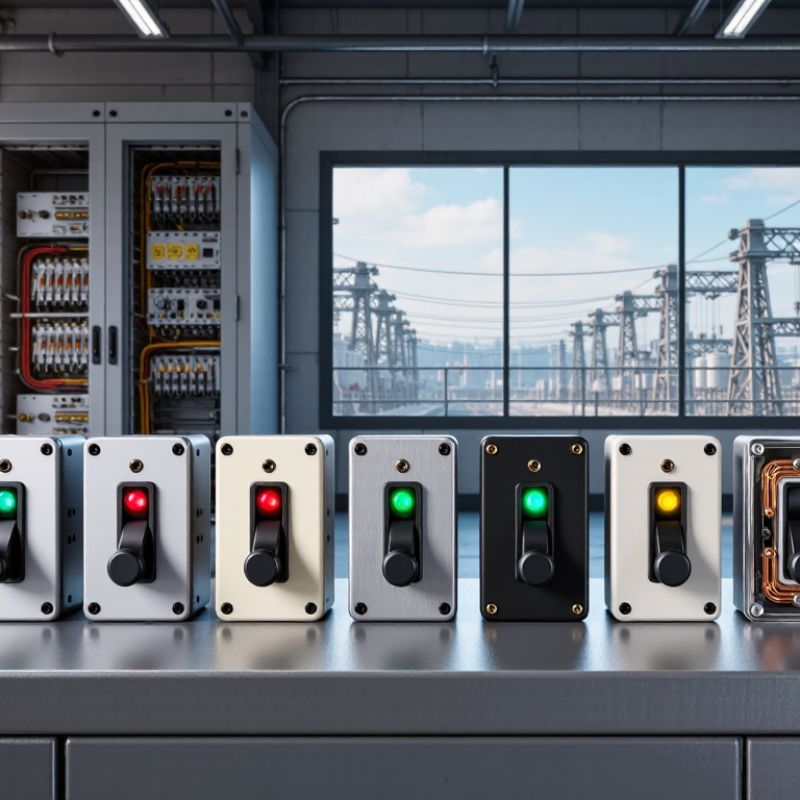
7 Best Circuit Switches for Global Buyers?

7 Best Circuit Switches for Global Buyers: IEC 60947-3 Guide

IEC 60947-3 is a practical starting point for comparing low-voltage circuit switches across international markets. It covers switches, disconnectors, switch-disconnectors, and fuse-combination units. Its scope includes equipment rated up to 1,000 V AC or 1,500 V DC. Buyers should check the rated operational current and voltage, utilization category, and short-circuit coordination—not just the headline ampere rating. A switch handling a resistive heater may not suit a motor circuit. Small detail, big difference.

Global projects also bring varied loads and installation conditions. The IEA’s Renewables 2024 report recorded nearly 510 GW of renewable capacity additions worldwide in 2023. This rapid build-out makes dependable isolation increasingly important in solar and other power systems. Still, the IEC marking alone cannot confirm suitability for every site. Check the product documentation against the actual load, switching frequency, enclosure, and local grid conditions. Real installations can be less tidy than a specification sheet suggests.

Tips

Ask suppliers for the IEC 60947-3 declaration and test documentation. Confirm AC or DC use, utilization category, and rated short-circuit conditions. Check ambient temperature, altitude, and ingress protection for the installation location. For motor loads, verify the declared switching category. If a detail is unclear, pause and get written technical confirmation.

Define the 1,000 V AC and 1,500 V DC Scope of IEC 60947-3

IEC 60947-3 covers switches, disconnectors, switch-disconnectors, and fuse-combination units for low-voltage circuits. Its stated scope reaches rated voltages of 1,000 V AC or 1,500 V DC. These limits define the standard’s range; they do not mean every device suits every circuit within it. Numbers matter.

For global buyers, check the switch’s rated operational voltage and current against the actual system, not just its product description. A 1,000 V AC rating does not automatically establish suitability for a particular load or installation. Utilization category, pole arrangement, isolation requirements, and coordination with protective devices also matter. DC applications deserve close attention: arc interruption can differ significantly from AC switching. A selection that looks right on paper may still need a careful review.

Tips: Compare the device markings and technical documentation with the circuit conditions, including load type and installation environment. Confirm which edition of IEC 60947-3 and which national adoption apply to your project. If a rating or application is unclear, ask the manufacturer or a qualified engineer before specifying the switch. A small ambiguity can become an expensive one.

IEC 60947-3 Voltage Scope: AC and DC Upper Limits

The standard covers relevant low-voltage switching devices with rated voltages up to 1,000 V AC or 1,500 V DC. These are scope boundaries, not recommended operating voltages or ratings for any specific product.

Always check the applicable edition of IEC 60947-3 and the device’s declared ratings for the intended application.

Compare 7 Switch Types by Rated Current, Poles, and Utilization Category

Rated current, pole count, and utilization category reveal more than a switch’s appearance. The ranges below are common selection bands, not guaranteed limits; verify each device’s nameplate and technical sheet.

A disconnector often spans 16–1,600 A, with one to four poles, and is typically rated AC-20 for isolation without load switching.
A load-break switch may cover 16–1,250 A, two to four poles, and AC-22 for mixed resistive and inductive loads.
A fuse-switch disconnector commonly offers 32–1,250 A, three or four poles, and may carry an AC-23 rating for motor or other highly inductive loads.
A manual changeover switch often ranges from 16–1,600 A with two, three, or four poles; its transfer duty needs checking against the applicable standard.
An automatic transfer switch can range from 16–3,200 A, usually with three or four poles; its transfer class is not interchangeable with an AC utilization category.
A rotary cam switch may handle roughly 10–250 A, with two to twelve poles; its category depends on the connected load and switching frequency.
A motor-protection switch commonly covers about 0.1–100 A, with three poles, and is selected for motor duty.

Small discrepancies matter. A 4-pole device can switch the neutral, but that is not always required; confirm the installation design and fault conditions before choosing.

Check Global Compliance with IEC 60947-3 and UL 98

For global buyers, the best circuit switch is not simply the one with the highest ampere rating. A panel-door isolator may face heat, dust, frequent operation, and fault currents. The International Energy Agency reported that global electricity demand grew 4.3% in 2024 in its Global Energy Review 2025. More electrified sites make dependable isolation a practical safety issue, not just a procurement checkbox.

IEC 60947-3 covers switches, disconnectors, switch-disconnectors, and fuse-combination units in low-voltage systems. UL 98 addresses enclosed and dead-front switches. These standards are not interchangeable passports. Ask for the exact model’s certification evidence, rated voltage, current, utilization category, pole configuration, and short-circuit coordination data. Check whether testing applies to the complete assembly, not only one component. Paperwork can still mislead.

Before choosing among seven candidates, match the switch to the installation. A three-phase machine isolator needs different operating endurance and enclosure protection than a small distribution-board device. Confirm the standard edition, certification mark, and destination-market acceptance with the supplier and local inspector. This step feels tedious. It can prevent costly substitutions after the panel is built.

7 Circuit Switch Types for Global Buyers: Check Compliance with IEC 60947-3 and UL 98

Switch type Typical application Key selection points Standards and compliance checks
Enclosed safety switch Local isolation of machinery, HVAC equipment, and other fixed electrical loads. Confirm rated voltage and current, number of poles, enclosure protection, mounting method, and whether fuses are required. UL 98 may apply to enclosed switches. Verify the exact product certification, ratings, and installation conditions; IEC 60947-3 may apply to the switch function and construction.
Switch-disconnector Manual isolation and switching of low-voltage circuits where a defined isolating function is required. Check operational category, rated operational current, short-circuit coordination, pole arrangement, and isolation indication. IEC 60947-3 covers switches, disconnectors, switch-disconnectors, and fuse-combination units. Do not infer compliance from the product type alone.
Fuse-switch disconnector Circuit switching and isolation combined with fuse-based overcurrent protection. Match fuse class and size to the design, verify available fault-current coordination, and confirm replacement access and spare-fuse requirements. Fuse-combination units are within the scope of IEC 60947-3. Check that the switch and specified fuse combination are covered by the applicable ratings and certification.
Load-break switch Switching a circuit under its specified normal load conditions, such as in distribution or industrial installations. Confirm the intended load type, utilization category, operating frequency, switching duty, and any separate short-circuit protection. IEC 60947-3 ratings and utilization categories help define switching duties. A load-break switch is not automatically a circuit breaker or overcurrent protective device.
Changeover switch Manual selection between two power sources, for example utility supply and a generator. Check source ratings, number of poles, neutral switching requirements, interlocking, and whether the design is break-before-make or another specified arrangement. The applicable standard depends on function and market. Transfer-switch equipment in North America may fall under UL 1008; UL 98 alone should not be assumed to cover every transfer application.
Photovoltaic DC isolator Isolation of DC circuits in photovoltaic systems, subject to the system design and local installation rules. Verify DC voltage and current ratings, polarity and pole arrangement, load-breaking suitability, environmental exposure, and the required location. IEC 60947-3 includes requirements for relevant switchgear, including photovoltaic applications. Confirm the product is specifically rated for the intended DC/PV duty; AC ratings are not interchangeable with DC ratings.
Motor-circuit switch-disconnector Isolation or switching associated with motor circuits, often alongside a separate motor starter and overload protection. Select for motor load and starting conditions; check the utilization category, required coordination, operating frequency, and lockout provisions. Use the IEC 60947-3 ratings relevant to the intended duty and verify any other standards required for the complete motor-control assembly.

Buyer note: IEC 60947-3 and UL 98 have different scopes and are not interchangeable. Confirm the exact standard, certification or listing, voltage and current ratings, enclosure suitability, and local installation requirements for the complete product and intended application.

Rank Switches by Load Fit, IP Rating, and Short-Circuit Coordination

A useful shortlist starts with the load, not the catalogue photo. For small lighting or control circuits, a compact switch-disconnector may be the best fit. For feeders with higher operating currents, choose a load-break switch rated for the actual duty. A fused switch-disconnector adds overcurrent protection, but only when its fuse selection matches the circuit. Keep the load type in view. Motors can draw a sharp starting current.

Enclosure protection matters where dust, washdown, or rain is expected. An IP-rated enclosure can help, but the required rating depends on the installation and exposure. Check cable entries and door seals too; the label alone does not protect a poorly assembled panel. For outdoor equipment, a weather-resistant enclosed switch may outrank a bare panel-mounted unit. Small details matter.

For short-circuit coordination, compare the available fault current with the switch’s withstand rating and the upstream protective device. Verify coordination data for the exact combination, voltage, and configuration. A molded-case circuit breaker or changeover switch may suit specialized feeder or supply-transfer duties, while a higher-current switch-disconnector fits larger loads. One ranking weakness is treating these as interchangeable. They are not. Global buyers should confirm local voltage, frequency, standards, and installation conditions with a qualified engineer before ordering.