Choosing an Automatic Diaper supplier in China involves more than comparing machine prices or production speed. Global buyers need to understand how a factory manages product quality, technical support, delivery schedules, and communication after installation. A polished brochure helps, but it cannot show how a production line performs during a real shift.
Look closely at practical evidence. Ask whether the supplier can demonstrate the equipment running, explain its output assumptions, and share references for comparable projects. Review details such as diaper size range, changeover time, material specifications, inspection procedures, and spare-parts availability. These points can affect daily output as much as the headline speed. Ask for clear answers. If a response is vague, record the concern and follow up before making commitments.
This guide introduces notable Chinese suppliers and the factors buyers can use to assess them. It focuses on manufacturing experience, automation capabilities, customization, service coverage, and the clarity of technical documentation. Supplier information can change, and public claims may not tell the whole story. Buyers should verify current certifications, factory capacity, and project references directly, then compare quotations on the same specifications. There is no perfect shortlist. Even a carefully researched supplier may need closer review, especially when requirements are unusual or after-sales support spans several regions. A site visit or live factory audit may reveal details that a catalog misses. When travel is difficult, request recent production videos and a structured online technical meeting. These checks take time, but they make supplier selection more grounded and easier to explain internally.
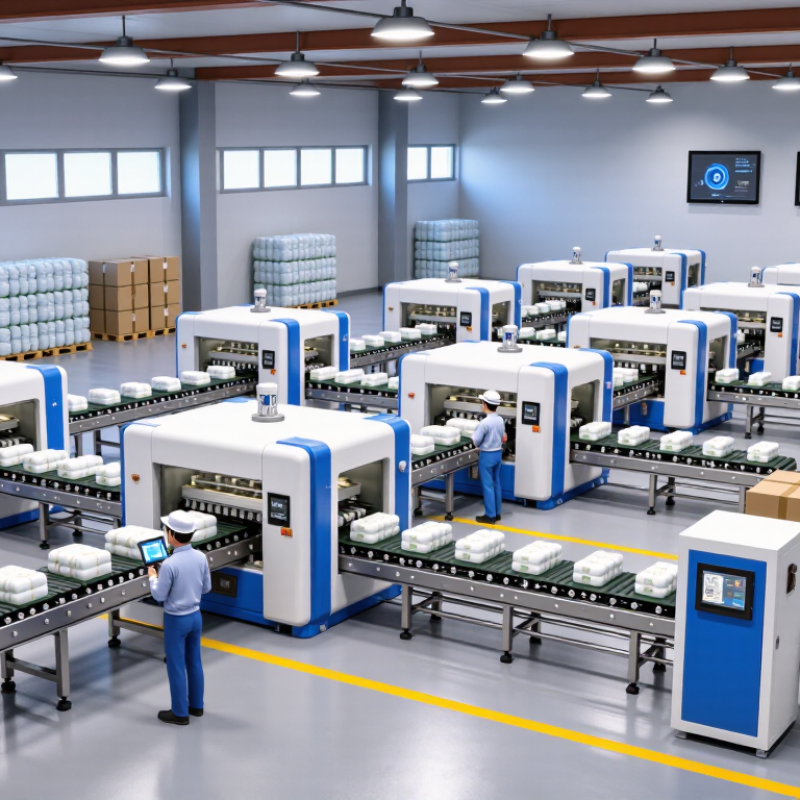
Automatic diaper suppliers in China may provide complete production lines, from fluff-pulp opening and core forming to fastening, folding, and packaging. Equipment options can include servo-driven modules, web guides, inspection cameras, and automatic roll splicing. Configurations vary by diaper size, absorbent-core design, and target output. Request a written equipment list instead of comparing headline speeds alone. A line’s rated speed may not reflect steady production with every material. Details matter. Suppliers may also provide sample trials, installation, operator training, spare parts, and remote technical support.
Useful support starts before the purchase. Ask for a factory acceptance test using agreed materials, and record output, reject rates, changeover time, and waste. Request machine drawings, utility requirements, maintenance schedules, and a clear list of included tooling. Ask how technicians handle faults and how quickly replacement parts can be dispatched. A brochure can make a line look simpler than it is; commissioning and material changes often reveal the harder questions. Some details may still be overlooked. Buyers should check references and confirm service commitments in writing before comparing final quotations.
China’s automatic diaper supplier market is not one uniform group. It includes production-line manufacturers, component specialists, and trading or engineering firms that coordinate projects. Some suppliers build complete lines, from web feeding and absorbent-core formation to cutting, folding, and packaging. Others focus on selected modules, such as tension control or visual inspection.
The map is not always tidy. A company may design a line but source motors, sensors, or glue systems from other factories. Buyers should ask who makes each critical module and who handles installation, training, and spare parts. A sample checklist helps: confirm line speed under stated product conditions, changeover time, reject rates, and utility requirements. Ask to see test records, not just a showroom run. Details matter.
Export experience can differ widely between suppliers. Check whether technical documents, remote support, and replacement parts are available in the buyer’s working language and time zone. A lower quotation may exclude commissioning or operator training. That matters. Factory visits and reference checks can clarify these gaps, although neither guarantees smooth production. Supplier structures vary, and even experienced buyers may overlook small interface issues between machines.
China’s automatic diaper production-line suppliers offer configurations for different product ranges, factory layouts, and output targets. Buyers should compare more than the quoted machine speed. Ask how performance changes across diaper sizes, material weights, and planned operating shifts. A line may include pulp forming, core wrapping, elastic application, cutting, folding, and stacking; confirm exactly where the supplier’s scope ends. Packaging equipment may be separate. Ask for evidence.
A technically sound supplier should provide clear process drawings, utility requirements, changeover procedures, and a list of recommended spare parts. Request a live or recorded trial using materials similar to those planned for production. Check whether operators can reach key adjustment points safely and whether routine cleaning is practical. Small details matter. References from comparable installations can help, but verify the product type and operating conditions before drawing conclusions. No line performs equally well in every factory.
Tips: Put acceptance criteria in writing before ordering. Define product dimensions, test duration, acceptable defect levels, and what counts as stable output. Ask who handles installation, operator training, and troubleshooting after commissioning. Keep a little room for uncertainty: actual results can vary with material quality, operator experience, and maintenance discipline.
Compare Chinese diaper suppliers using one written specification, not polished catalog photos. Set the same size, absorbent-core weight, SAP content, fastening type, and packaging for every sample. Then test absorption time, rewet under pressure, leakage, and fit on the same schedule. Ask for batch records and independent lab reports; a sample can perform well while production varies. Small details matter.
Check factory capacity, minimum order quantity, lead time, defect handling, and change-control procedures. The World Bank’s 2023 Logistics Performance Index gave China a score of 3.7 out of 5, useful context for logistics, but not proof of any supplier’s delivery record. Request recent shipment data and clarify whether quoted lead times include inspection and port handling. Sustainability claims need similar scrutiny: the OECD’s Global Plastics Outlook reported 353 million tonnes of plastic waste worldwide in 2019, with only 9% recycled. Ask suppliers to separate packaging data from product claims. I would not treat a recyclable carton as evidence that a diaper itself is recyclable. Verify the paperwork.
For global buyers, supplier selection should extend beyond price and production capacity. Request a complete export file: commercial invoice, packing list, shipment records, and product test reports matched to the exact diaper specification. Confirm that material composition, absorbency claims, carton labels, and destination-market requirements agree across documents. Small mismatches can delay clearance. Paperwork matters. UNCTAD’s Review of Maritime Transport 2024 reports that over 80% of global merchandise trade by volume travels by sea, making shipment visibility and document accuracy practical purchasing concerns. Ask for named contacts, tracking milestones, and a procedure for handling damaged cartons or delayed loads.
Compliance needs ongoing checks, not a one-time certificate. Buyers should verify that testing covers the supplied product and keep approval samples, batch identifiers, and change-control records. The World Bank’s Logistics Performance Index 2023 assessed 139 economies; China ranked 19th, with a score of 3.7. This is useful context, not a guarantee for any factory or shipment. Keep records. After-sales terms should define response times, evidence required for a claim, replacement or credit options, and who pays return freight. Request periodic defect summaries and corrective-action reports. No checklist is perfect. Even careful buyers may overlook a packaging change, so schedule a pre-shipment review and document any exceptions before goods leave the factory.
An anonymized buyer due-diligence matrix. It presents verification points rather than rankings or claims about individual suppliers; applicable requirements depend on the destination market and product type.
| Evaluation area | What buyers should verify | Useful evidence or questions | Buyer risk / decision point |
|---|---|---|---|
| Factory and production control | Confirm the manufacturing site, whether production is in-house or subcontracted, and how incoming materials, in-process checks, and finished goods are controlled. | Request a live or third-party factory audit, process flow, quality-control plan, and recent batch inspection records. Confirm which site will produce the order. | A trading or sales office is not proof of manufacturing capability. Undisclosed subcontracting can affect consistency and traceability. |
| Automatic production equipment | Check that the proposed line can make the requested diaper type, size range, construction, and packaging format. Assess changeover, maintenance, and downtime controls. | Ask for a line demonstration and a production trial using the agreed specification. Verify actual output and reject rates during the trial rather than relying only on rated machine speed. | Rated capacity may differ from saleable output. Confirm that the production schedule supports the order quantity and delivery window. |
| Product specification and samples | Set measurable requirements for dimensions, absorbency test method, leakage performance, fastening, waistband, materials, packaging, and labeling. | Approve a signed specification and sealed reference sample. Define test methods, acceptance limits, sampling plan, and how any design or material change requires approval. | Terms such as “soft,” “high absorbency,” or “premium” are not measurable acceptance criteria without agreed test methods and limits. |
| China standards and destination-market compliance | Identify the product category and applicable requirements in both China and the destination market. Chinese GB/T 28004.1-2021 covers disposable baby diapers; GB/T 28004.2-2021 covers disposable adult diapers. | Request current test reports for the exact product and intended market, and have the importer or a qualified compliance specialist confirm applicable laws, labeling, chemical restrictions, and documentation. | A test report or voluntary standard alone does not establish compliance with every destination-market rule. Requirements vary by market and product claims. |
| Certificates and test reports | Check the issuing body, scope, validity, site, product, and test methods for every certificate or report presented. | Verify documents with the issuer where possible. Treat management-system certification, such as ISO 9001, as evidence about a management system—not as product approval. | Documents for another factory, product, or test method may not support the goods being purchased. |
| Export documentation and customs data | Agree on the exporter of record, product description, quantity, country of origin, packing details, and responsibility for export and import formalities. | Review a draft commercial invoice, packing list, and bill-of-lading instructions before shipment. Confirm the HS classification with a customs broker for the destination jurisdiction. | Classification, duties, and document requirements can vary. Do not rely on an unverified tariff code or a supplier’s estimate as a binding customs decision. |
| Shipping terms and lead time | Specify the named place or port, delivery responsibilities, production lead time, shipment window, and treatment of delays. | Use the agreed Incoterms® 2020 rule with a precise named place. Confirm carton and pallet dimensions, loading plan, and whether the schedule includes inspection and booking time. | Incoterms allocate defined delivery obligations, costs, and risks; they do not by themselves set payment terms, product quality, or remedies for delay. |
| Traceability and batch release | Confirm that finished cartons can be linked to production dates, line or shift, material lots, inspection results, and shipment records. | Ask for a sample batch record and agree on carton coding, record-retention period, and a documented hold-and-release process for nonconforming goods. | Weak traceability makes investigation, containment, and targeted corrective action more difficult. |
| Inspection and acceptance | Agree on pre-shipment inspection timing, inspection scope, sampling method, defect definitions, and acceptance criteria before production. | Use a mutually agreed inspection plan and independent inspection when appropriate. Link payment milestones and shipment release to the contractually agreed acceptance process. | A sampling inspection does not guarantee that every unit is defect-free. Define how failed inspections are handled and who pays for reinspection. |
| After-sales and complaint handling | Assess response ownership, investigation timelines, corrective-action process, replacement or credit terms, and escalation contacts. | Include a written complaint procedure covering evidence required, batch traceability, root-cause analysis, corrective action, and agreed remedies in the purchase contract. | “After-sales support” is difficult to enforce unless responsibilities, deadlines, and remedies are documented. |
| Commercial terms and supply continuity | Compare minimum order quantity, tooling or artwork charges, payment schedule, price validity, capacity allocation, and backup-material arrangements. | Document specifications, change control, forecast assumptions, cancellation terms, ownership of customized artwork or tooling, and contingency plans. | A low unit price may not include tooling, testing, freight, duties, inspection, or costs arising from specification changes. |
Practical shortlist rule: compare suppliers using the same product specification, destination market, inspection plan, and shipping basis; verify claims against current documents and a production sample.