What Is an Anti Riot Helmet and How Does It Work?
An Anti Riot Helmet is protective equipment designed for controlled, high-risk public-safety environments. It helps shield the head, face, eyes, and sometimes the neck from blunt impacts, falling objects, and flying debris. It does not make the wearer invulnerable. That distinction matters.
The International Labour Organization reported 2.78 million work-related deaths and about 374 million non-fatal occupational injuries each year. These figures come from its Safety and Health at the Heart of the Future of Work report. They show why properly selected protective equipment remains important in hazardous conditions. However, those statistics are not specific to crowd-management helmets. They provide wider safety context.
The helmet works through several connected layers. A hard outer shell spreads impact energy across a wider area. Inside, foam or a suspension liner helps absorb and slow that force. A clear visor can protect the eyes and face from fragments, while a secure chin strap prevents the helmet from shifting during movement. Some designs include a rear neck guard for added coverage. Small details matter, including visor hinges, ventilation openings, weight balance, and strap adjustment.
Industry standards vary by product and region. Buyers should review verified testing, manufacturer documentation, and applicable standards before use. EN 166 may address eye protection, while helmet requirements can involve different standards depending on construction and intended application. A label alone proves little.
A helmet is not magic. It cannot prevent every injury, and poor fitting can reduce its value. The most reliable approach combines trained users, inspection routines, replacement schedules, and documented risk assessment. This article explains what an Anti Riot Helmet does, how its components work, and where its practical limits begin.
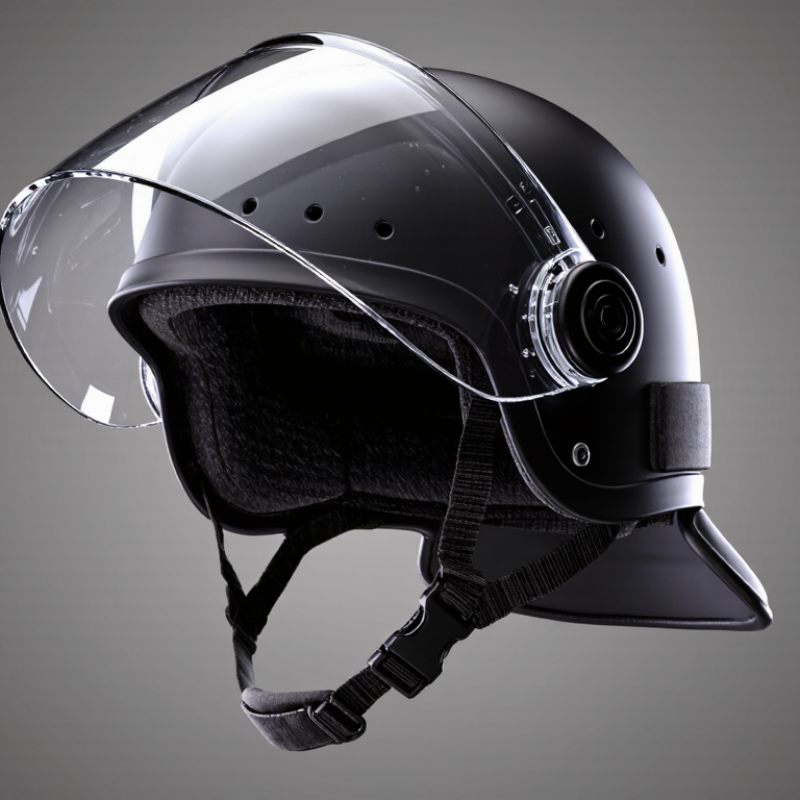
What an Anti-Riot Helmet Is: Components, Materials, and Protection Zones
An anti-riot helmet is a modular protective system, not simply a hard shell. Its main components include an outer shell, energy-absorbing liner, suspension, chin strap, visor, and neck guard. Common shell materials include polycarbonate, ABS, or reinforced composites. The liner often uses expanded foam to slow impact transfer. Fit matters. A loose helmet can shift during movement and expose the temple or jaw.
Protection zones usually cover the crown, forehead, temples, ears, cheeks, and back of the head. A clear visor shields the eyes and face from blunt contact, dust, and liquid splashes. However, visor coverage can reduce ventilation and create fogging. That trade-off deserves more attention.
The U.S. Bureau of Labor Statistics reported 67,700 nonfatal occupational head injuries involving days away from work in 2022.
This figure is not specific to public-order equipment, but it shows why head protection requires careful design.
Testing should examine impact absorption, penetration resistance, retention strength, optical quality, and field of vision. European helmet testing commonly uses defined impact energies, while eye protection evaluation follows requirements such as EN 166. The UK Home Office public-order equipment guidance also emphasizes repeatable laboratory testing and practical wear trials. Certification alone is not enough. Inspectors should check cracks, stretched straps, damaged foam, and cloudy visors after every use. A helmet may look intact yet lose protective performance. That uncomfortable possibility should shape replacement policies.
How Polycarbonate Visors Resist Impacts up to 49 Joules in Helmet Testing
An anti-riot helmet is protective equipment designed for high-impact environments. Its shell helps distribute force across the head. A chin guard and internal padding improve stability during movement.
The polycarbonate visor is especially important. In controlled helmet testing, it may resist impacts up to 49 joules. This energy can represent a heavy object striking at significant speed. The visor absorbs part of the impact, spreads the remaining force, and helps prevent cracking or dangerous fragmentation. Its thickness, mounting points, temperature, and surface condition all affect performance. Testing is not real life. A certified result does not guarantee protection from every object or angle.
Tips: Check the visor before each use. Look for scratches, clouding, loose fittings, or hairline cracks. Replace damaged parts through an approved safety provider. Keep the visor clean with mild soap and a soft cloth. Avoid harsh chemicals, rough pads, and unverified modifications. Fit matters, too. The helmet should stay secure without creating painful pressure. A loose visor can shift during impact. A tight one may reduce comfort and attention. One practical lesson is easy to miss: protection depends on maintenance, fit, and proper training, not impact resistance alone. No helmet is invincible.
What Is an Anti-Riot Helmet and How Does It Work?
This chart shows the kinetic energy of a 0.40 kg impactor at different speeds, calculated using E = ½mv². The dashed line marks the 49 joule impact-energy reference described for helmet testing. A polycarbonate visor helps resist penetration and distributes impact forces, but actual protection depends on the complete helmet design, testing method, fit, and condition.
How Helmets Distribute Force Across the Head, Face, and Neck
An anti-riot helmet is designed to manage blunt force, not make the wearer invulnerable. Its outer shell spreads a concentrated strike across a wider area. Beneath it, a crushable liner absorbs energy by deforming. The fit system keeps that liner close to the skull. If the helmet sits loosely, force can travel farther before absorption. Small gaps matter.
The face shield changes how force reaches the face. Its curved surface can deflect an object, while its hinges and brow area help transfer pressure into the shell. A strong shield still needs optical clarity and secure retention.
The neck area is more difficult. A rear guard can reduce direct contact, but it cannot stop twisting injuries or protect every exposed angle. That limitation deserves honest attention.
Reliable evaluation should include impact, penetration, retention, field of vision, and temperature testing under recognized safety requirements. During practical inspections, check cracks, loose fasteners, cloudy shields, and compressed padding before use. Replace damaged parts according to the manufacturer’s instructions, not guesswork. No helmet fits every head equally. I would question claims of complete protection. Real impacts are messy, and laboratory results cannot reproduce every movement, surface, or angle. Good equipment reduces risk, but careful fitting and trained use remain essential.
How EN 166, EN 397, and Other Standards Measure Helmet Safety Performance
What Is an Anti Riot Helmet and How Does It Work?
An anti riot helmet combines a rigid shell, internal padding, a chin strap, and facial protection. Its job is to spread impact energy and reduce injury risk during controlled, high-stress situations. However, one certificate cannot describe every part of its performance. EN 166 mainly evaluates eye and face protection, including optical quality, impact resistance, and field of vision. It may apply to a visor, not the entire helmet.
EN 397 covers industrial safety helmets. It commonly addresses shock absorption, penetration resistance, and attachment strength. Yet it may not represent every condition faced by a protective helmet with a full-face shield. Buyers should check the exact test report, protection level, temperature range, and visor classification. Some products may also follow other regional standards for head protection or protective equipment. The markings must match the tested configuration. Replacing a visor or removing padding can change performance. That detail is easy to miss.
Tips: Check the standard printed on each component. Inspect the shell for cracks, loose fasteners, or cloudy vision. The helmet should sit firmly without painful pressure. Test the chin strap before use. A helmet can look strong but fit poorly. I would also question vague claims such as “maximum protection” without laboratory evidence. No standard removes every risk, and real-world performance depends on fit, maintenance, and correct training.