Skip To Content

7 Tips for Buying Glasgow Mobility Scooters

Choosing a mobility scooter in Glasgow is not just about comparing prices. It is about matching a scooter to the journeys you actually make: crossing a busy pavement, reaching a local shop, or storing it safely at home. The right choice can make everyday outings feel easier. The wrong one can become an expensive obstacle.

“Choose for your real routes, not just the showroom floor,” says [insert the verified name of a Glasgow mobility expert and an exact, sourced quote]. Confirm the expert’s credentials and wording before publication; a made-up quotation would mislead readers. That advice captures the heart of this guide. A test drive matters. So does checking whether the scooter fits through your doorway, turns comfortably in tight spaces, and meets your needs for range and support.

This guide explores seven practical tips for buying Glasgow Mobility Scooters, from assessing where you will travel to comparing comfort, battery range, servicing, and total cost. Ask specific questions. Take your time. A neat brochure cannot show how a seat feels after twenty minutes, or how a scooter handles the route outside your home. And one point deserves honest reflection: the most powerful model is not always the most suitable. Your daily habits, storage space, and confidence behind the controls matter just as much. Compare carefully, seek qualified advice, and choose for the life you lead—not an imagined one.
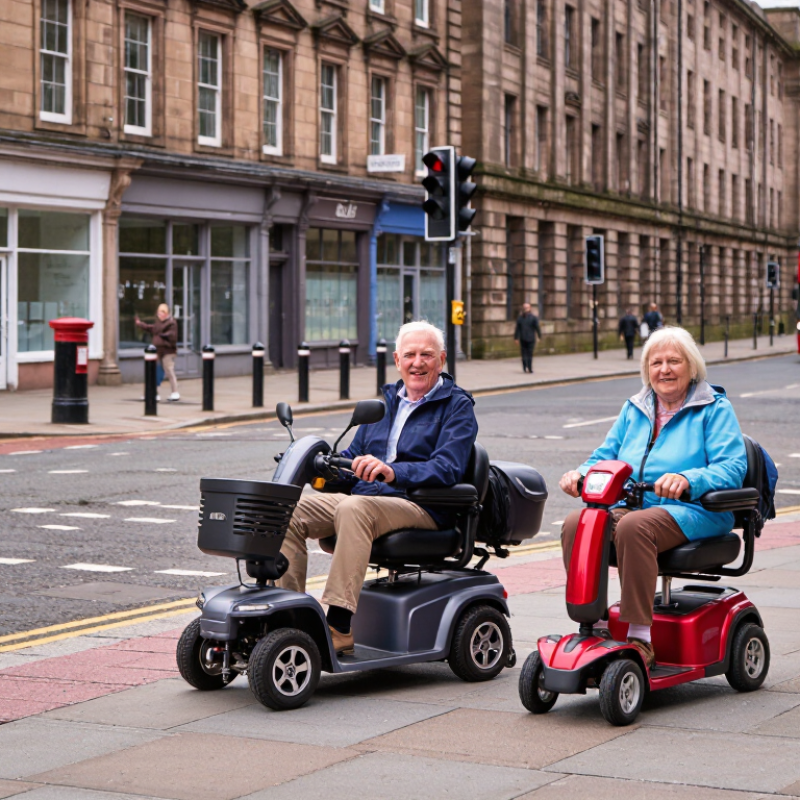
7 Tips for Buying Glasgow Mobility Scooters

Choose a Glasgow Scooter Class: UK Rules Set 4 mph and 8 mph Limits

Before choosing a Glasgow mobility scooter, check which class suits the journeys you actually make. UK rules set a 4 mph maximum for Class 2 scooters, which are designed for pavement use. Class 3 scooters can travel at up to 8 mph on roads and must be limited to 4 mph on pavements. That difference matters around busy streets, where a faster road setting is not suitable beside pedestrians. Slow down near shop entrances and crossings.

Think about your regular route. A journey along wide roads may favour a Class 3 scooter, while short trips on smooth pavements may not need the extra road speed. Glasgow routes can include uneven paving, dropped kerbs, and crowded high streets. Try turning and stopping in a safe, open area before buying; speed is only one part of control. Small detail, big difference.

Class 3 scooters must be registered with the DVLA before road use. Check the controls, lights, and speed limiter, and make sure you can switch to the pavement limit easily. Local signs and temporary restrictions may also affect where you can ride. A route that looks simple on a map can feel different in rain or heavy foot traffic, so test your likely journeys if possible.

Check Class 3 Size, Weight and DVLA Registration Requirements

When comparing Glasgow mobility scooters, treat Class 3 measurements as practical checks, not catalogue trivia. A Class 3 scooter must be no wider than 0.85 metres. Measure your doorway, hallway, and usual route before choosing one. Check the scooter’s overall width, including fittings such as mirrors. A showroom floor can feel spacious; your front entrance may not.

Tip Check the weight figures carefully. Ask for the scooter’s weight with batteries fitted, the weight of any removable section, and its maximum user weight. These figures are not interchangeable. If you plan to transport it, compare the heaviest section with your car hoist or safe lifting limit. I might be tempted by a lighter model, but comfort and stability deserve a closer look too.

Tip A Class 3 scooter must be registered with the DVLA before road use. Confirm the paperwork matches the scooter’s identification details, rather than assuming a previous owner’s documents are enough. Class 3 models can travel up to 8 mph on roads and must be limited to 4 mph on pavements. At handover, check the lights, indicators, mirrors, horn, and brakes. Small checks matter. If the scooter’s class or documents are unclear, verify the current DVLA requirements before buying.

Match Battery Range and Terrain Capability to Your Glasgow Journeys

A scooter’s advertised range is a useful starting point, not a promise for every Glasgow trip. Hills, frequent stops, passenger weight, and cold weather can all reduce battery distance. Leave a margin. If your usual journey includes a return trip, plan for both legs and a diversion, rather than relying on the maximum figure.

Look closely at the ground you actually travel over. A route through the city centre may involve uneven paving, dropped kerbs, and tight turns, while some residential streets have steeper gradients. Check the scooter’s manual for its safe slope limit, ground clearance, and guidance on wet surfaces. Rain and slick leaves matter too. A capable battery cannot make an unsuitable slope safe.

Before buying, try a similar route on a test ride, if available. Include a hill, a turn, and a short stretch of rough pavement; notice how the scooter starts, stops, and feels under load. Ask how long charging takes and whether the battery can be removed for charging at home. A map can make a route look simple. It may feel quite different at walking pace, and I would leave room to reconsider after a real trial.

Compare Seating, Controls and Safety Features Before a Test Drive

When comparing mobility scooters in Glasgow, assess the seat, controls and safety features together. A seat should support your hips and lower back without pressing behind your knees. Check whether its height, armrests and position can be adjusted. A wider seat may feel reassuring, but it can make turning through a narrow shop doorway harder. Small details matter.

Sit in each scooter for several minutes, not just a quick spin. Keep your shoulders relaxed and check that you can reach the tiller, indicators and horn without leaning forward. Try the speed control and reverse in a clear, level area. The controls should feel predictable, not twitchy. If your hands become tired, mention it; that is useful information, not a failure.

Before a test drive, compare lighting, mirrors, braking response and stability. Ask how the scooter behaves on slopes and wet paving, conditions you may encounter around Glasgow. Test only on a suitable route with the supplier’s guidance. Notice how easily you get on and off, and whether the footrests interfere. Try both. A feature that looks helpful in a brochure may feel awkward in daily use. Ask for the operating instructions and take time to consider what you noticed.

7 Tips for Buying Glasgow Mobility Scooters - Compare Seating, Controls and Safety Features Before a Test Drive
What to compare Compact Class 2 Outdoor Class 2 Class 3
1. Typical use Short trips and manoeuvring in smaller spaces; check the turning circle against your usual routes. Pavement journeys and outdoor paths; check ground clearance and suitability for the surfaces you use. Longer journeys that may include roads; check the route, storage and charging arrangements.
2. Maximum speed and use Maximum 4 mph. Intended for pavement use; road use is permitted only where there is no pavement. Maximum 4 mph. Intended for pavement use; road use is permitted only where there is no pavement. Maximum 8 mph on roads and 4 mph on pavements. Must be registered with DVLA for road use.
3. Seat and support Check seat width, back support, armrest position and whether the seat can be adjusted to suit you. Check that the seat remains comfortable on a longer trip and that armrests help you get on and off safely. Try the seat for longer periods; check adjustment, support and how easily it swivels, if fitted.
4. Controls and reach Try the tiller, speed control and direction controls. Check that you can reach and operate them comfortably. Check that the controls are easy to use while wearing gloves and that the tiller can be adjusted to a comfortable position. Practise accelerating, slowing and steering. Confirm that the speed control is easy to manage on different parts of your route.
5. Safety features Check the brakes, steering response and any fitted lights or reflectors; equipment varies by model. Check the brakes and visibility features, and ask how the scooter behaves on the slopes or uneven surfaces you expect to use. Road-going Class 3 scooters must have lights, indicators, hazard warning lights, a rear-view mirror, a horn and a speed limiter.
6. Size, transport and storage Measure doorways and storage space. If you need to lift it into a vehicle, check the weight of each part and how it dismantles. Check overall length and width, turning space and whether it fits your chosen storage area. Check that you have suitable secure storage and charging access; many models are not designed for frequent lifting into a car.
7. Test-drive checklist Try a tight turn, a stop and restart, and mounting or dismounting. Ask about battery range and charging time. Test steering, braking and comfort on a representative outdoor surface. Ask how range changes with load and terrain. Practise the controls in a safe area and check visibility, mirrors and lights. Confirm registration requirements and the route’s suitability.
Specifications, seating options, dimensions and battery range vary by model. Confirm the exact details and legal requirements before purchase, and arrange a supervised test drive.

Review Dealer Support, Warranty and Servicing Costs in Glasgow

Tip 1: Check dealer support before buying. Ask how quickly a technician can reach your part of Glasgow, and whether home visits include travel charges. Get the answer in writing. A showroom promise can sound reassuring, but response times may vary during busy periods. Ask who handles repairs if your scooter stops away from home. Small detail, big difference.

Tip 2: Read the warranty line by line. Check how long it covers the battery, motor, and controls, and whether parts and labour are included. Ask what counts as wear and tear. Get exclusions explained plainly. A long warranty can still leave important costs uncovered. That is easy to miss.

Tip 3: Request an itemised servicing estimate. Ask about routine checks, replacement tyres, call-outs, and collection or delivery fees. Glasgow’s slopes, uneven pavements, and wet weather may affect how often some parts need attention, depending on your route and use. Compare written estimates, not just package names. I would not assume the cheapest plan is best; check what it actually covers.